
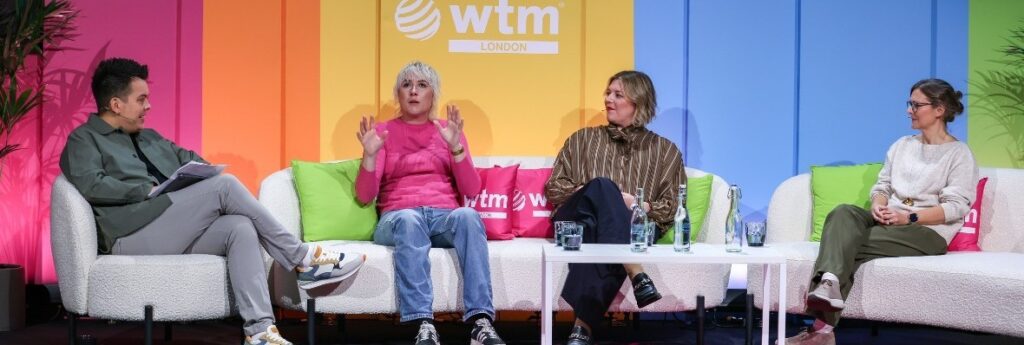
At last week’s WTM London, British TV stars Bettany Hughes and Maisie Adam took to the stage at WTM London to share their tips about marketing travel and holidays, the latter as part of a marketing summit panel titled “Comedy Sells.”
The comedian and star of “Taskmaster” and “A League of Their Own,” Adam told delegates: “It’s about making the ordinary, extraordinary,” as she recalled interviews with passengers about etiquette on planes.
Having worked with several tourism boards, Adam went on to explain “There is a human element to travel…we have to grab [consumers] with more than just where it is. You don’t have to show off Machu Picchu; you could be at an airport talking about the mundane.”
The comedian showed clips from her recent Swiss tourism film, which featured activities such as sliding down a bobsleigh run and trying a fondue. Adam said: “It’s about telling a story well and enjoying yourself. Other people see you’re having a great laugh, so they want to come and find out more.”
She closed by telling the audience: “Humour is a special language…and a great tool for connection.”
Also on the panel was Martin Clarke, Sr. Tourism Marketing Manager at West Midlands Growth Company, who screened the brand’s recent marketing video featuring Black Sabbath’s Tony Iommi, a tour guide called William, who dresses as William Shakespeare, a taxi driver, a chef, and a ballet dancer.
“A West Midlands Welcome” was produced by BBC Storyworks, the commercial content studio of BBC Studios, showcasing the region’s varied culture, sights and food to the US and Canadian markets.
Clarke said the humorous story-telling approach “hit the nail on the head.”
The region in western England, which includes Birmingham, welcomed a record number of visitors over the past year, with overseas travellers up 2% year on year, including a “big chunk” from North America.
Ursula Horne, Head of Insights at BBC Studios, said they used the “science of engagement” to study how viewers of the videos responded to the content and found it humorous, surprising and thought-provoking.
Bettany Hughes
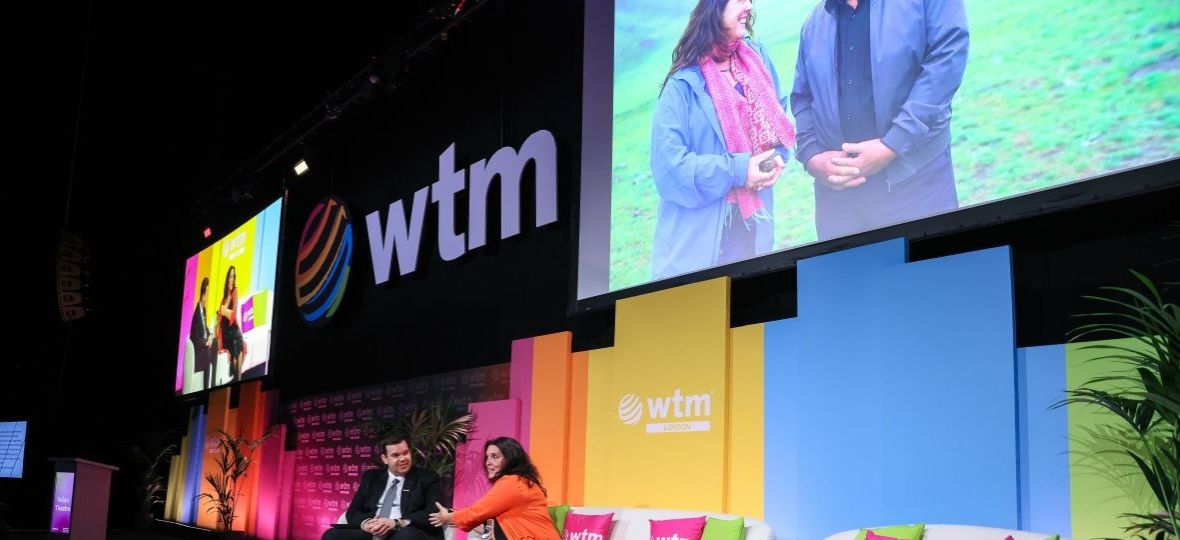
Later, a marketing session featuring prominent historian and broadcaster Bettany Hughes, heard how culture, history and heritage can encourage a deeper understanding of destinations, with her TV shows attracting 450 million viewers around the world last year.
Hughes shared clips of some of her history documentaries (which can be seen on BBC and TVO in Canada), featuring the temple at Ephesus, the Magura Cave complex and a rose festival in Bulgaria, and Nabataean sites from Saudi Arabia to Jordan. Clips from some shows have gone viral, she said, as people were fascinated by artefacts such as a 2,000-year-old Bulgarian perfume bottle and colourful paint pots from Pompeii.
Musing on her ‘Seven Wonders of the Ancient World’ series, she said: “Wonder proves what we can do if we collaborate. If we wonder, we engage; if we engage, we care; if we care, we understand; and if we understand, we love. Travelling with wonder is literally an act of love. Wonder makes us feel good and you guys should be selling it.”
Keep it real
Another marketing session explored 12 factors that motivate travellers, ranging from curiosity and happiness to mentorship, serendipity and empathy. Journalist Ash Bhardwaj used examples from his own travels – ranging from a school rugby trip to New Zealand to walking in Uganda and raving in Ibiza – to show how storytelling can inspire travel.
He warned there is now so much AI-generated content online that using it can lead to “rubbish,” adding: “Real news stories generated by journalists and storytellers will still matter. AI will not find what is new and interesting.”
Generation Alpha
Elsewhere, another marketing session looked at how Generation Alpha – those born between 2010 and 2024 – are already redefining travel. Food futurist Tony Hunter said this generation is “deeply attached” to technology, and by the age of nine, they have access to at least four devices. They are also the gateway to the wallets of their millennial parents, he said.
Hunter outlined technological advances in generative AT, biowearables and quantum computing that will accelerate change in food tech and the shift to greater personalization, adding: “These technologies are science fact and their impact will be felt. “Catering to Gen A now ensures the relevance of the travel industry for decades to come.”
If this article was shared with you by a friend or colleague, you may enjoy receiving your own copy of Travel Industry Today with the latest travel news and reviews each weekday morning. It’s absolutely free – just CLICK HERE.