


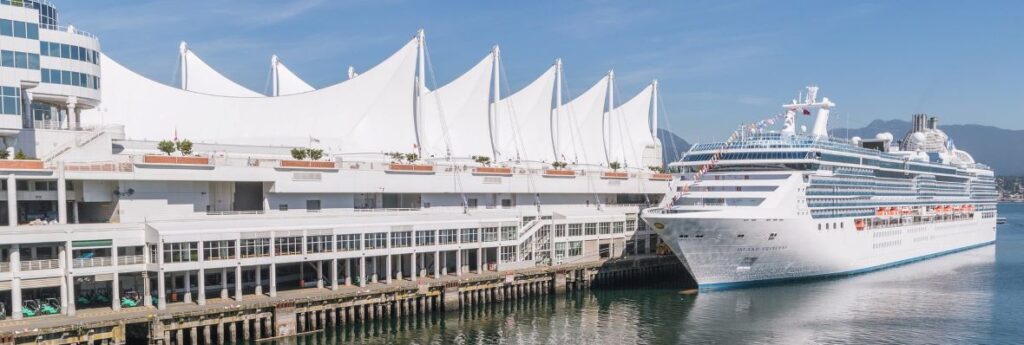
The final cruise ship of the 2025 season, Coral Princess, departed from the Canada Place cruise terminal in Vancouver today (Tuesday) marking the end of a cruise season in which 301 cruise ships called in the city, delivering 1.2 million passengers since March 5. The successful 2025 season follows several record seasons, with preliminary bookings indicating another strong year to come in 2026.
“This year’s success underscores the cruise sector’s power as an economic engine,” said Shri Madiwal, VP of Operations and Supply Chain at the Vancouver Fraser Port Authority. “Each sailing brings millions of dollars in passenger spending that circulates through hotels, restaurants, attractions, and suppliers, helping to strengthen our regional economy.”
Cruise activity through the Port of Vancouver contributes more than $1 billion annually to the local economy, with each ship visit injecting an average of nearly $3 million into local businesses and services. Cruise lines spend up to $660 million each year on local goods and services, and passengers spend an average of $450 each on hotels, restaurants, shopping, tours and local attractions, and more.
2025 cruise season facts and highlights
- The first cruise ship this season was the Disney Wonder on March 5
- Eight vessels made their inaugural call to the Port of Vancouver in 2025: Europa II; Norwegian Jade; Silver Moon; Ocean Riviera; Seabourn Quest; Viking Venus; Villa Vie Odyssey; Anthem of the Seas
- The Canada Place cruise terminal at the Port of Vancouver welcomed the following cruise lines in 2025: Celebrity Cruises, Disney Cruise Line, Hapag-Lloyd Cruises, Holland America Line, Hurtigruten Expeditions (HX), Norwegian Cruise Line, Oceania Cruises, Peace Boat, Ponant, Princess Cruises, Regent Seven Seas, Royal Caribbean, Seabourn, Silversea Cruises, Viking Ocean Cruises, Villa Vie Residences
- Facial biometric scanning for passengers embarking on a trip was introduced in 2024, improving the terminal’s ability to seamlessly handle high numbers of cruise passengers and enhance passenger experience. The technology has reduced the time it takes to pass through U.S. border control by up to 94%, with average transaction times dropping from 2-3 minutes (passport kiosks) to less than 10 seconds
- Shore power technology allows ships to shut down their diesel-powered auxiliary engines and plug into B.C.’s low-emission, hydro-powered electrical grid while berthed at the Port of Vancouver, including Canada Place. The technology has helped prevent more than 50,000 tonnes of greenhouse gas emissions (CO2) – equivalent of taking about 11,750 gasoline-powered cars off the road for a year
- The first ever local cruise ship for LNG refueling took place in Vancouver this year. LNG is the first alternative fuel available at the port in significant quantities for the international maritime sector—supporting industry efforts to enhance sustainability and reduce emissions.
- Vancouver has been a homeport for Alaska cruises for more than 35 years, acting as the base for one-way and round-trip cruises through the pristine Inside Passage
“Vancouver continues to be one of North America’s premier homeports, consistently attracting cruise travellers from around the globe. This reflects the growing demand for cruise vacations, and we’re excited to build on that momentum in 2026,” said Donna Spalding, Senior Advisor at Cruise Lines International Association (CLIA).
In 2025, the Canada Place cruise terminal was named ‘North America’s Leading Cruise Port’ and nominated for ‘World’s Leading Cruise Port 2025’ by World Travel Awards.
If this article was shared with you by a friend or colleague, you may enjoy receiving your own copy of Travel Industry Today with the latest travel news and reviews each weekday morning. It’s absolutely free – just CLICK HERE.