


By CINDY-LOU DALE/ Safari cuisine was once the weakest link in an otherwise extraordinary experience. Lodges typically relied on colonial-era menus, imported ingredients, and dishes that bore little connection to the landscapes in which they were served. But across Africa, that model is being rapidly replaced. A new generation of chefs and lodge operators are reshaping bush dining by embracing indigenous produce, heritage recipes, and hyper-local sourcing.
This shift marks the rise of the culinary safari – an experience where travellers combine wildlife encounters with gastronomic exploration, and where the aromas of roasted millet or baobab-infused dishes create as much anticipation as the prospect of tracking lions at dawn.
A New Kind of Safari Experience
Today’s top lodges are creating menus that truly reflect the continent’s biodiversity. Guests are invited to join foraging walks through mopane woodlands, learn about edible plants once used by traditional healers, and discover the versatility of ingredients such as baobab, marula, and African basil. Dining often takes place under open skies, with lantern-lit tables and the distant sounds of the bush forming the backdrop.
The result is a cuisine grounded in place – shaped by local communities, seasonal cycles, and a growing guest demand for sustainability and authenticity. For the travel trade, this emerging category offers clear opportunities for differentiation in an increasingly competitive safari market.
Sashwa River of Stars: Ahead of the Curve
One property leading this culinary transformation is Sashwa River of Stars, located in South Africa’s Greater Kruger region. Long before plant-based menus became a global trend, Sashwa positioned itself around eco-conscious, plant-forward dining – not as a compromise, but as a hallmark of luxury.
Aesthetically, the lodge balances natural textures and understated elegance. Suites feature stone, woven grasses, and recycled-wood finishes, opening directly onto private bush- or waterhole-facing decks. With only a small number of suites, guest experience leans toward exclusivity and low-impact luxury – an attractive proposition for operators focusing on regenerative tourism.
The Garden that Powers the Plate
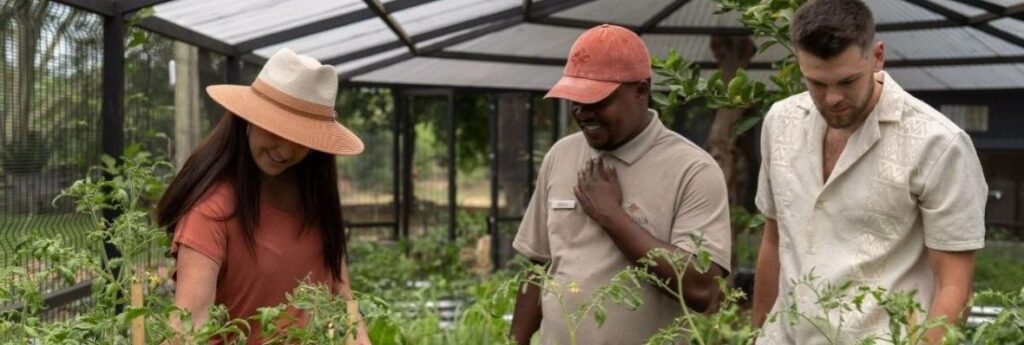
At Sashwa, the culinary story begins in the lodge’s organic garden. Under the stewardship of head gardener Believe, the garden yields a vibrant array of vegetables, herbs, and heritage crops. Additional produce is sourced every Tuesday from suppliers in nearby Hoedspruit; each is personally known to the lodge, ensuring transparency and community benefit.
This hyper-local supply chain model resonates strongly with global travellers who prioritise ethical sourcing and community upliftment. For agents, it’s a selling point that enhances the narrative of responsible travel.
Wine with Impact: Conservation in Every Glass
Sashwa’s beverage program takes the same values-driven approach. The lodge partners with Painted Wolf Wines, a boutique South African producer whose profits support African wild dog conservation initiatives. This alignment of dining and conservation allows travellers – and the operators who sell to them – to engage with stories that deepen the emotional value of the safari experience.

A Menu Defined by Place
Sashwa’s plant-forward menu showcases regional ingredients in contemporary, globally informed preparations. For example:
- Breakfast: Mushroom tortilla, homemade sourdough, nut butters infused with local spices
- Lunch: Herb-flecked dirty rice, roasted root-vegetable salads, fresh-pressed seasonal juices
- Dinner: Cucumber carpaccio with saffron-tamari drizzle; cauliflower steak on butter-bean purée; slow-braised tomato broth with African basil; poached pear with rooibos ice cream
These dishes demonstrate how African ingredients can be elevated without losing authenticity – a key message for travel sellers promoting experiential luxury.
Culinary Leadership: Chef Arabella Parkinson
Chef Arabella Parkinson, based in Cape Town, brings classical culinary training informed by Ayurvedic principles. Her role at Sashwa involves intensive training residencies and continuous remote collaboration with the lodge’s team. Her focus is on balance, sustainability, and flavour integrity – values increasingly sought after by wellness-oriented travellers.
Chefs Koketso and Agree, who lead the daily kitchen operations, craft menus that adapt with the seasons. Everything is prepared in-house, from cashew-based sauces to romesco and saffron-infused condiments.
Wellness in the Bush: Beyond the Plate
Sashwa has expanded its offering to incorporate a robust wellness element. Morning yoga sessions, facilitated by respected instructor Dylan Bernstein, take place on an elevated deck overlooking the riverbed. His background in Ashtanga and Buddhist movement practices influences sessions that prioritise breathwork, grounding, and alignment.
In the late afternoons, guests gather beneath a towering nyala tree for guided meditation sessions. These experiences position Sashwa as a strong product for the wellness travel sector, appealing to clients seeking restorative, nature-based retreats.
The lodge’s boutique spa further enhances its wellness credentials with treatments based on African botanicals such as marula and wild rosemary.
Game Drives and Sound Safaris: Multi-Sensory Wilderness Experiences
While cuisine and wellness distinguish Sashwa’s offering, game viewing remains central. Morning and afternoon game drives are led by experienced naturalists skilled in interpreting the subtleties of the bush – from bird calls to spoor identification.
A standout differentiator is the lodge’s sound safari, guided by Ian Shoebotham, a specialist in wildlife acoustic ecology. Guests listen through headphones as Ian decodes the rhythms and patterns of the bush: kudu alarm calls, woodpecker drumming, termite flights, elephant foraging sounds. It’s a unique, immersive approach that diversifies traditional game drive expectations and adds high experiential value.
Sundowners are served against classic Kruger sunsets, with options ranging from hibiscus spritzers to South African rosé – an elegant close to the day’s explorations.
The Future of Safari Dining
Sashwa River of Stars reflects a broader shift sweeping across Africa’s lodge industry. Safari cuisine is no longer a functional offering; it is becoming a defining feature of the guest experience. By championing indigenous ingredients, supporting local communities, and integrating conservation-conscious supply chains, lodges are creating culinary narratives that resonate with the modern traveller.
For the travel trade, this evolution represents a chance to market safaris not just as wildlife journeys, but as immersive, multi-sensory cultural experiences. In this new era of safari dining, the wild is something travellers’ taste as much as they see.
For more information, visit https://sashwa.org .
If you enjoyed or found this story useful, we’d appreciate if you would forward it to a colleague or friend who may also enjoy it. If, on the other hand, a friend shared it with you, welcome! You can get all the latest travel news and reviews from Travel Industry by simply clicking HERE.