


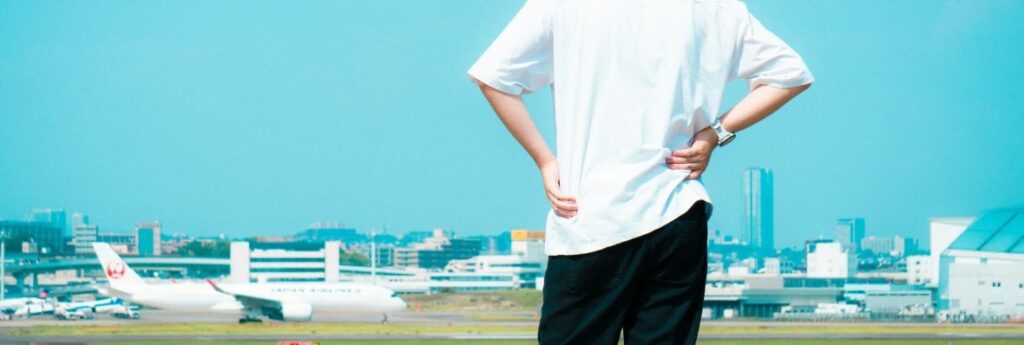
With summer travel and long-haul flights picking up, many passengers are preparing for airport delays, packed cabins, and hours in cramped seats. But one travel issue often gets ignored until arrival: aching legs, stiff hips, swollen feet, and post-flight soreness.
Kieran Sheridan, resident physical therapist and co-owner of GulfPhysio.com, says flight discomfort is often caused by a simple problem: the body is not designed to stay folded into one position for hours.
“Most people blame the seat, but the bigger issue is how long the body stays still,” says Sheridan. “When the calf muscles are inactive, they cannot help pump blood back up from the lower legs as effectively. That is why passengers often land feeling swollen, stiff, or heavy-legged.”
According to research on body aches after flying research on body aches after flying, prolonged sitting can reduce circulation, cause blood to pool in the lower legs, and contribute to swelling, stiffness, and soreness. Low cabin humidity may also contribute to dehydration, fatigue, headaches, and cramps.
Tips for a more comfortable flight
- Move before you board
Sheridan recommends doing light mobility exercises before getting on the plane, especially if you know you will be sitting for several hours.
“Use the airport lounge or even the gate area as your warm-up space,” he says. “A few heel raises, hip stretches, or gentle inchworms can wake up the calves, hips, and lower back before the flight starts.”
- Do not stay still for the whole flight
Even if the seatbelt sign limits movement, Sheridan says passengers can still do small exercises from their seat.
“Ankle circles and foot pumps are simple, but they matter,” he explains. “You are giving the calves something to do, which helps support circulation in the lower legs.”
He recommends ankle circles, foot pumps, seated knee-to-chest stretches, and gentle neck rolls during longer flights.
- Walk when it is safe to do so
Sheridan advises passengers to get up every 40 minutes to two hours where possible. “A bathroom break is still movement,” he says. “You do not need a full workout in the aisle. Even a short walk helps break the cycle of sitting.”
- Hydrate before cramps start
Cabin air can be dry, and dehydration may make cramps, headaches, and fatigue worse. “People often avoid drinking water because they do not want to keep getting up, but that can backfire,” says Sheridan. “Hydration supports how your muscles feel during and after travel.”
- Stretch after landing
Sheridan warns against going straight from the plane into another long period of sitting, such as a taxi, train, or hotel bed.
“After landing, give your body a reset,” he says. “Walk through the airport, stretch your calves and hamstrings, or take a short walk once you arrive. Your body has been compressed for hours, so ease it back into movement.”
- Pack simple support tools
For long-haul passengers, Sheridan recommends practical items such as a travel pillow, water bottle, compression socks where appropriate, and resistance bands for post-flight stretching.
“Resistance bands are useful because they are light, easy to pack, and can help with hip, hamstring, chest, and lower-body stretches after travel,” he says.
When flight aches need medical attention
Most post-flight stiffness is temporary, but Sheridan says travelers should pay attention to symptoms that feel unusual.
“If one leg becomes very swollen, red, sharply painful, or symptoms worsen instead of improving, do not dismiss it as normal travel soreness,” he says. “That is when it is safer to seek medical advice, especially after a long-haul flight.”
If you enjoyed or found this story useful, we’d appreciate if you would forward it to a colleague or friend who may also enjoy it. If, on the other hand, a friend shared it with you, welcome! You can get all the latest travel news and reviews from Travel Industry by simply clicking HERE.