


From Venice to Barcelona to Amsterdam, European cities are struggling to absorb surging numbers of tourists. Some residents in one of Paris’ most popular tourist neighbourhoods are now pushing back.
A black banner strung between two balconies in Montmartre reads, in English: “Behind the postcard: locals mistreated by the Mayor.” Another, in French, says: “Montmartre residents resisting.”
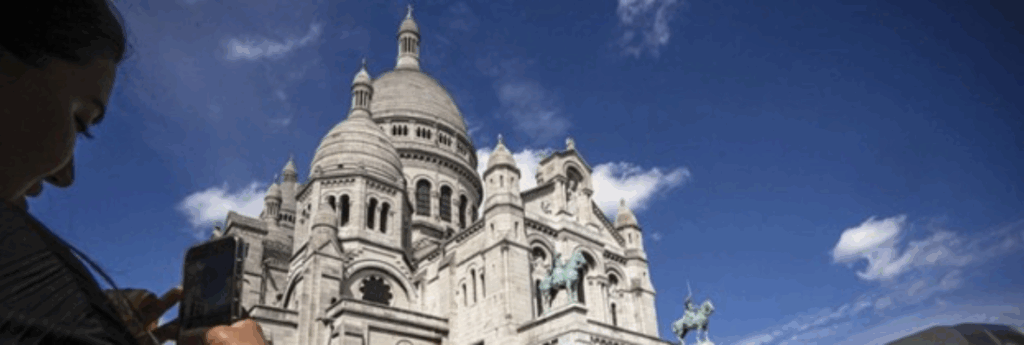
Atop the hill where the Basilica of Sacré-Coeur crowns the city’s skyline, residents lament what they call the “Disneyfication” of the once-bohemian slice of Paris. The basilica says it now attracts up to 11 million people a year – even more than the Eiffel Tower – while daily life in the neighbourhood has been overtaken by tuk-tuks, tour groups, photo queues and short-term rentals.
“Now, there are no more shops at all, there are no more food shops, so everything must be delivered,” said 56-year-old Baroin, a member of a residents’ protest group called Vivre a Montmartre, or Living in Montmartre.
The unrest echoes tensions across town at the Louvre Museum, where staff in June staged a brief wildcat strike over chronic overcrowding, understaffing and deteriorating conditions. The Louvre logged 8.7 million visitors in 2024, more than double what its infrastructure was designed to handle.
A postcard under pressure
Paris, a city of just over 2 million residents if you count its sprawling suburbs, welcomed 48.7 million tourists in 2024, a 2% increase from the previous year.
Sacré-Coeur, the most visited monument in France in 2024, and the surrounding Montmartre neighbourhood have turned into what some locals call an open-air theme park.
Local staples like butchers, bakeries and grocers are vanishing, replaced by ice-cream stalls, bubble-tea vendors and souvenir T-shirt stands.
Visitors seemed largely to be enjoying the packed streets on a recent day.
“For the most part, all of Paris has been pretty busy, but full of life, for sure,” said American tourist Adam Davidson. “Coming from Washington, D.C., which is a lively city as well, I would say this is definitely full of life to a different degree for sure.”
Europe’s breaking point
In Barcelona, thousands have taken to the streets this year, some wielding water pistols, demanding limits on cruise ships and short-term tourist rentals. Venice now charges an entry fee for day-trippers and caps visitor numbers. And in Athens, authorities are imposing a daily limit on visitors to the Acropolis, to protect the ancient monument from record-breaking tourist crowds.
Urban planners warn that historic neighbourhoods risk becoming what some critics call “zombie cities” – picturesque but lifeless, their residents displaced by short-term visitors.
Paris is trying to mitigate the problems by cracking down on short-term rentals and unlicensed properties.
But tourism pressures are growing. By 2050, the world’s population is projected to reach nearly 10 billion, according to United Nations estimates. With the global middle class expanding, low-cost flights booming and digital platforms guiding travellers to the same viral landmarks, many more visitors are expected in iconic cities like Paris.
The question now, residents say, is whether any space is left for those who call it home.
If this article was shared with you by a friend or colleague, you may enjoy receiving your own copy of Travel Industry Today with the latest travel news and reviews each weekday morning. It’s absolutely free – just CLICK HERE.