

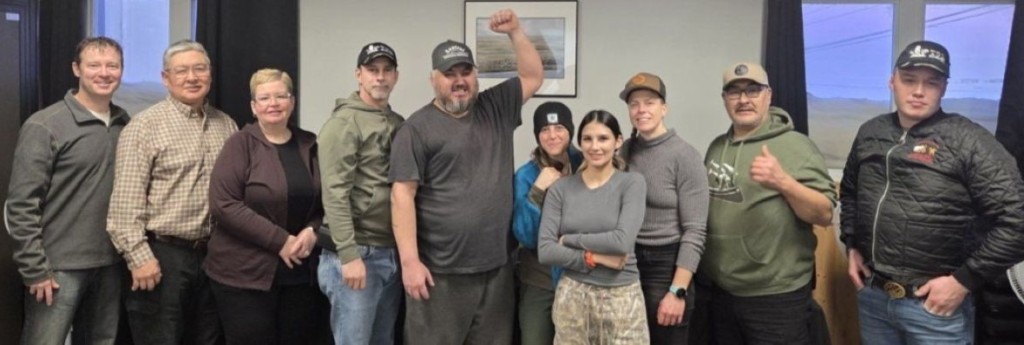
A memorandum of understand (MOU) recently signed amongst tourism associations from the three territories will ensure northern travel businesses can collaborate and share industry knowledge, according to the president and CEO of Travel Nunavut.
“We all sit at the table of a national level group where all the provinces and territories are part of a Travel Industry Association. And we thought it would be good to form a group just made up of the territories because we have a bit of a unique situation, and there’s a lot of similarities between the territories,” Alex Stubbing said of the MOU signed during the Arctic Summit in Whitehorse, Yukon.
The Arctic Canada Tourism Network will ensure they have a “clear, informed voice” when discussing the Arctic at a national level, he said. “I think there’s more and more focus on the Arctic with regards to sovereignty, security, resilience, and Canada’s Northern presence.”
Stubbing said the MOU is exploratory in nature and will be a way of seeing where things are different and where they are the same in terms of challenges and opportunities within the travel industry.
“It could be a way where we share research and data so that we can not just show the economic impact of the travel industry in one territory, but in the whole Canadian Arctic. It could be a way where we develop common messaging about tourism when we’re trying to attract people from certain areas, or introduce people to the territory from certain areas,” he said.
In a press release issued in Yukon during the Summit, Ed Romanowski, the chair of Travel Nunavut said the travel industry in Nunavut is rooted in “community, culture, and Inuit livelihoods.”
“This collaboration helps ensure northern voices are meaningfully reflected in Arctic discussions, bringing practical, on-the-ground experience into policy conversations and supporting thoughtful, community-led development across the North,” he said.
In the Kivalliq region of Nunavut, Stubbing said the travel industry is “doing quite well.” Flights within the region are fairly full in their daily flights to communities and accommodation businesses have good vacancy rates, with more bed and breakfasts opening up.
Tourism growth
“So, from that perspective I think the travel industry in the region is quite strong,” he noted.
Nation-building infrastructure projects such as the building of the new Inuit Nunangat University in Arviat and the Qikiqtarjuaq port on Broughton Island will put the spotlight on the Arctic and as a result, more infrastructure will be needed to support travel and growth, he noted.
“You will have more people coming into a community or the region. It means there’s going to be more services to accommodate them, more cafés, more restaurants, more hotels, potentially more flights.
“So those big infrastructure projects that we see and that we’re hearing more and more about in the territory would have a positive effect on the travel industry.”
Stubbing said much of the travel within the Kivalliq region and Nunavut as a whole, is done by Nunavummiut themselves – for business, sports, medical travel, or to visit family.
“The people travelling the territory is not primarily made up of your leisure tourists,” he said.
However, Stubbing does see a chance for future growth in the tourism sector.
Cruise ship tourism is on the rise and increasing members in the hunting and fishing business means there is more opportunity to cater to sport hunters for the Kivalliq, he noted.
Growth through learning
This potential opportunity was the basis for offering two recent workshops in Rankin Inlet, he said.
The first, Advanced Wilderness First Aid, had 17 participants and taught by two instructors from Sirius MedX and the feedback was “overwhelmingly positive” with strong engagement, he noted.
The second workshop, Growing Inuit Hunting Tourism, was taught by the Beasley Brothers from the Canadian hunting television show, Canada in the Rough.
“The sessions covered hunter expectations, social media, and website development. Twelve participants attended. Overall, the workshop was very well received and provided valuable tools to help tour operators and sport hunters strengthen and promote their businesses.”
Stubbing said creating the network was a way to represent a more unified travel industry voice at Arctic forums and in national discussions, and they will have their first meeting at the end of March to develop the scope and opportunities that are presented as they collaborate.
Overall, Stubbing said the Kivalliq region is one which has a thriving culture and hosts “amazing wildlife, whether it’s on the land or in the sea.”
“I think you know, it’s a pretty neat, unique place to go. So, I think when you combine the culture, the people, the history, the heritage, the wildlife, I think, there’s multiple reasons why you would go. And I think people are definitely starting to see that.”
If you enjoyed or found this story useful, we’d appreciate if you would forward it to a colleague or friend who may also enjoy it. If, on the other hand, a friend shared it with you, welcome! You can get all the latest travel news and reviews from Travel Industry by simply clicking HERE.