


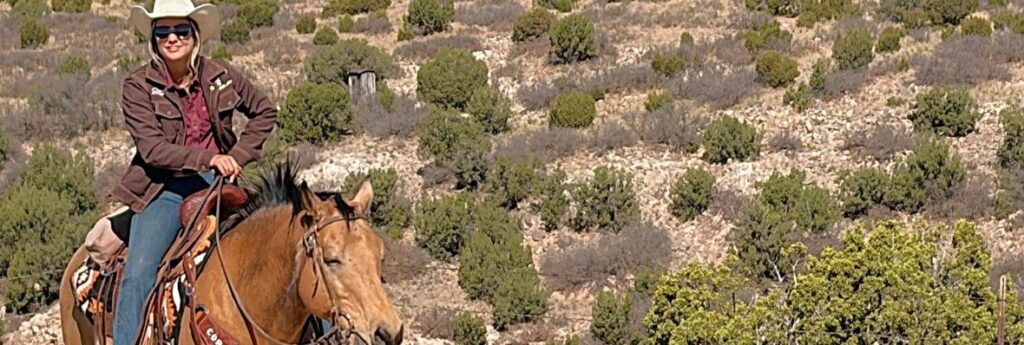
By MICHAEL BAGINSKI/ Never mind MAGA, Amarillo, Texas has embraced a different vibe: Make America Cowboy Again. Located in the heart of the state’s northern Panhandle, the city is having a moment in the West Texas sun thanks in part to the booming interest in western and cowboy culture generated by the hit TV show “Yellowstone.”
“When people are thinking of Texas, they’re thinking of our area – whether they realize it or not,” says Hope Hoeffner of the Amarillo Visitors and Convention Bureau. “Amarillo has been portrayed for years in Hollywood, often as the West Texas style they’re looking for. All the big cities are fantastic and have great offerings, but people are often disappointed when they come to Texas and get off the plane in the larger cities because it’s just not what they were expecting.
“When they come to Amarillo, they find the wide-open spaces, people wearing cowboy hats, you can ride a horse… So, this is genuinely the place they were thinking of when they think of Texas.”
Hoeffner says Amarillo naturally exhibits “all the typical cowboy offerings you would think of –the horseback riding, rodeos, and events like that.”
Importantly, she emphasizes, “We don’t have any of the hokey dude ranches and things like that. Everything is truly authentic, so when you do these cowboy culture things, it’s on a real working ranch and a lot of the activities are centred around that.
“Beyond that, one thing that can’t be replicated is the hospitality of the people – that is something that is authentically western. Beyond just the activities you can’t do in other places, the hospitality just can’t be found.”
She laughs that around Amarillo, your car can’t break down for more than 10 minutes without someone stopping to help.
“It’s little things: ‘Yes, sir… no, ma’am. Holding doors open for you, taking your (cowboy) hat off when saying hello. Things like that.”
Even the rodeos are more authentic than many on the usual event circuit, Hoeffner contends, explaining that participants are “working cowboys” (and cowgirls) who are competing in events that correspond to their actual daily routines, such as roping and milking cows, and not events “just for show” (such as barrel racing).
She notes that the Working Ranch Rodeo Association is headquartered in Amarillo.
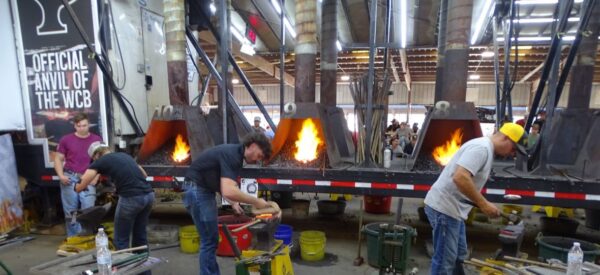
On our visit, we ambled by the homespun World Championship Blacksmiths (photo below) at the local fairgrounds, which attracts competitors from around the world to forge horseshoes, tongs, and assorted tools, etc.
Along with the corresponding West Texas Ranch Rodeo, event co-founder Randy Whipple explained, “It’s a neat way to spread our culture and it helps keep it alive.”
When the cows come home
But while Amarillo offers western culture till the cows come home, there’s much more than that Hoeffner says of the “decent sized city” of over 200,000 people.
“So, while the western culture is alive and thriving, we still have a metropolitan aspect to it. You can still go into downtown and have all these metropolitan amenities, But then you just drive 15 minutes east or west and you can watch, as we say, your dog run away for days.
“It’s that flat land, those Texas sunrises and sunsets that you just don’t get in many other places. And you can go from the ‘concrete canyon’ downtown to the real canyon (Palo Duro) in just 20 minutes down the road.”
Amarillo is also reportedly the second windiest city in the U.S. (after Chicago), making the landscape ideal for wind turbines, which stretch to the horizon.
It’s also, obviously, cattle country, which influences local cuisine, with Hoeffner boasting, “When you’re looking for steaks I don’t think there are many places you can find better steaks. We produce 80% of the beef that comes out of Texas, so I think that speaks volumes about the quality of the beef you’re going to get here.”
Nowhere is a steak break more of an occasion than at the Big Texan Steak Ranch and Brewery, a can’t miss stop on the I-40. The family-owned restaurant – in operation since 1960 and now recognized by the Hampton Hotels Save-a-Landmark program – is part restaurant, part spectacle and beloved by visitors and locals alike
Bright yellow with sky high signage and a giant cow, the restaurant has regularly appeared on Man v. Food, Food Paradise, Conan O’Brien, and many other TV shows, and is arguably the top attraction in town.
Specializing in locally sourced steaks and prime rib, and another specialty, “mountain oysters” (aka bulls testicles), the venue will on any given night attract at least one adventurous patron to attempt the “challenge” of eating a 72-ounce steak (with rolls, baked potato and salad) in less than 60 minutes – a feat rarely accomplished.
Get your kicks in Amarillo
Situated roughly halfway between Oklahoma City and Albuquerque, New Mexico, in the heart of middle America, Amarillo also falls along the iconic Route 66 highway, which is notably being celebrated for its 100-year anniversary in 2026.
In fact, just 80 km. west of the city is the midpoint of “the Mother Road,” which has been immortalized in popular culture, from the 1946 song “Get Your Kicks on Route 66,” to the animated “Cars” films, and plenty more in between.
Hoeffner says the Route is a big draw for Amarillo, with many visitors using it as a base to explore both east and west along the Texas 66 highway, which was replaced by an Interstate in the 1960s, turning small towns into shadows of their former selves, left to quiet existences that nevertheless still embody traditional values and memories of small town America.
One of them, Vega, boasts the free Milburn Price Culture Museum, a small house packed with local Route 66 memorabilia, history and stories, and improbably, the massive arm of a wind turbine that visitors can enter.
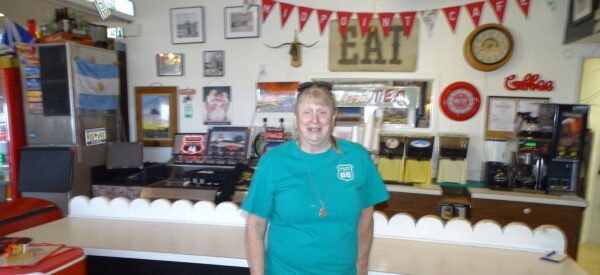
A little further down the road at Midpoint, aptly named for being equidistant between the Route’s start in Chicago and end in Santa Monica (Los Angeles), Brenda Hamit enthusiastically serves pie at the Midpoint Café, a nostalgic diner that is a regular stop for coaches and bikers, but mostly individuals rolling along the Route.
Hamlit says about 80% of her clients are international, including many Canadians, and that this year’s anniversary has resulted in business that has never been better, laughing, “it’s killing me, but it’s so much fun.”
She waved goodbye with a smile and a hug, sending us off with an ample slice of “ugly crust” pie in a brown paper bag – just another everyday act of hospitality and authentic, irreplaceable experience synonymous with the place.
In the Amarillo proper, the Route 66 Historic District is coloured with local shops, art and vintage character, not least at the Golden Light Café, the oldest continually operating restaurant on Route 66, known for its burgers and laid-back atmosphere.
Buried treasures and other must-sees
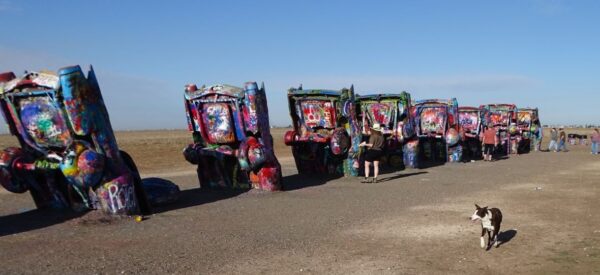
Another prime attraction is Cadillac Ranch, immortalized in the Bruce Springsteen song of the same name. The unique outdoor art installation has been attracting visitors since 1974 to a flat agricultural field about 15 minutes west of the city on I-40 where 10 Caddys are half buried in a row, nose down at the same angle as the great pyramids of Giza.
Today, the free site (it’s literally in a farmer’s field on the side of a highway with no human structures around) attracts large crowds each day, who come to leave their mark by spray painting graffiti on the cars to post a personal mark in time – at least until the next person comes along and paints over it (pick up a can at the nearby Home Depot); also in the evening for phenomenal sunsets.
Other buried treasures in and around Amarillo include Combine City (tractors) and Slug Bug (Volkswagen Beetles), prompting Hoeffner to observe, “We like to bury things.”
Some other popular attractions/venues in Amarillo to help fill out a two- to three-day itinerary include:
Palo Duro Canyon State Park Tour: The second-largest canyon in the U.S. offers dramatic landscapes and signature Texas views.
Cowgirls and Cowboys in the West: Guests will experience “the real West” with a guided horseback ride through wide open Texas along the rim of Palo Duro Canyon State Park. (With luck you’ll see a rattlesnake on the trail).
American Quarter Horse Hall of Fame and Museum: The history and impact of the American Quarter Horse – “the horse that settled the West” – is celebrated through interactive exhibits.
Bill’s Backyard Classics: An incredible private collection of vintage cars open to the public, each one meticulously restored and maintained by knowledgeable, hands-on mechanics who bring the stories behind them to life.
The ol’ ball game: The main game in town is minor league baseball, with the local Sod Poodles (Arizona Diamondbacks affiliate) competing in an enthusiastic atmosphere bursting with quirky Americana charm.
Creek House Honey Farm: A peaceful farm setting offering fresh, locally inspired meals and honey-based products.
The Barfield, Autograph Collection: A beautifully restored historic hotel that blends Amarillo’s Western roots with modern luxury. Perfectly positioned in the heart of downtown Amarillo, The Barfield is one of the city’s first luxury boutique hotels. Don’t miss the onsite Paramount Recreation Club, a Prohibition-era speakeasy which is accessed by a secret door found by following mosaic bullets in the floor and pushing the button for Player Cigarettes on a vintage dispensing machine.

Canadians
Despite Amarillo not being particularly well known – “even for Texans” – and well-documented political tensions between the Canada and the U.S., Hoeffner says Canadian visitations (and Internet interest) have been steadily growing for about three years, which she in part attributes to the interest to “Yellowstone” and subsequent trending cowboy culture.
“A lot of Canadians are looking for things to do in Amarillo. There is a curiosity since western culture has become popular. For us, it’s a way of life, not a trend. But we’re excited that the trend has given us an opportunity to share our heritage and way of life with everybody,” she says.
“As we grow, it’s very important that we keep that heritage. It’s windy, the land is harsh – that’s what made our community and our heritage so important. You had to have a really strong community and grit and integrity to even be able to settle this area, so it’s important to us to maintain that, and share it with others.”
Accessible by air via Houston, Dallas, Denver, or Las Vegas, Amarillo remains largely a drive market for Canadians, both as a stop along Route 66 and on the way from the east to the Grand Canyon.
A new highway link is also being developed that will run from the Saskatchewan border to the Texas gulf that Visit Amarillo expects will boost Canadian visitations further.
“It’s a place people have driven through,” Hoeffner concedes, but adds, “I really encourage people to get off the highway and visit the city. We want to share our culture and really showcase what authentic western looks like in all of the trendiness that’s currently happening.”
Local guide (and former Visit Amarillo director of marketing) Eric Miller, says his city is eager to extend its legendary hospitality to Canadians.
“I don’t care what the popular sentiment is,” he says. “Canadians are welcome. And always will be!”
If you enjoyed or found this story useful, we’d appreciate if you would forward it to a colleague or friend who may also enjoy it. If, on the other hand, a friend shared it with you, welcome! You can get all the latest travel news and reviews from Travel Industry by simply clicking HERE.