



By CINDY-LOU DALE/ Japan’s hospitality sector is entering a defining new phase. After years of recalibration following the pandemic, the country’s luxury hotel pipeline for 2026 reveals a confident, carefully considered return to growth – one that prioritises cultural sensitivity, adaptive reuse and regional diversification over sheer scale.
Rather than concentrating solely on Tokyo and Osaka, developers and global brands are placing long-term bets on cities where heritage, identity and modern travel demand intersect.
Four 2026 openings – in Kyoto, Nara, Nagoya and Sapporo – offer a compelling snapshot of this shift. Together, they illustrate how luxury hospitality in Japan is evolving from opulence as spectacle to luxury as stewardship.
Kyoto: Discretion in the Cultural Capital
Imperial Hotel Kyoto | Opened March
Any new hotel opening in Kyoto faces a uniquely high bar. Japan’s former imperial capital is defined by 1,200 years of continuous history, more than 1,600 Buddhist temples and 400 Shinto shrines – and a fiercely protected aesthetic code that resists intrusion.
Imperial Hotel Kyoto, which opened in March near the historic Kiyamachi district, approaches this challenge with deliberate restraint. Rather than making a visual statement, the hotel positions itself as a quiet extension of its surroundings, blending refined modern design with timeless Japanese aesthetics.
The property unfolds through a series of intimate spaces: lush garden courtyards that act as contemplative pauses; tearooms designed for authentic, small-scale tea ceremonies; and curated art installations that reference Kyoto’s imperial and artistic legacy. Materials are tactile and subdued, with an emphasis on proportion, natural light and negative space – design choices that mirror Kyoto’s own architectural grammar.
For the Imperial Hotel brand, long associated with diplomacy and understated luxury in Tokyo, this expansion is strategic rather than symbolic. Kyoto remains one of Japan’s highest-value destinations, but one increasingly focused on managing overtourism and attracting culturally engaged, longer-stay visitors. Imperial Hotel Kyoto aligns closely with that agenda, offering a model of luxury that prioritizes immersion, discretion and respect for place.
Nara: Adaptive Reuse with Cultural Depth
HOSHINOYA Nara Prison | Opening April
If Imperial Hotel Kyoto exemplifies restraint, HOSHINOYA Nara Prison represents ambition of a different kind. Opening in April, the property is among Japan’s most audacious adaptive-reuse projects to date.
The hotel occupies a former red-brick penitentiary built during the Meiji era – a period when Japan was rapidly modernizing and redefining its institutions. Closed in 2017, the building has since been designated an Important Cultural Property. Hoshino Resorts’ decision to transform it into a 48-room luxury hotel, while also incorporating the Nara Prison Museum, reflects a growing willingness to engage with complex histories rather than erase them.
Located just north of Nara Park – home to some of the world’s oldest temples and its famously free-roaming deer – the property sits at the crossroads of Japan’s spiritual origins and its modern past. The design preserves the prison’s architectural integrity, with vaulted corridors, heavy brickwork and symmetrical layouts reimagined as contemplative guest spaces.
For travellers, the experience promises something rare: a stay that is intellectually engaging as well as indulgent. For the industry, HOSHINOYA Nara Prison underscores the commercial viability of heritage-led hospitality when executed with sensitivity and narrative clarity. It also reinforces Nara’s growing appeal as an alternative to Kyoto for travellers seeking depth without density.
Nagoya: Urban Luxury Comes of Age
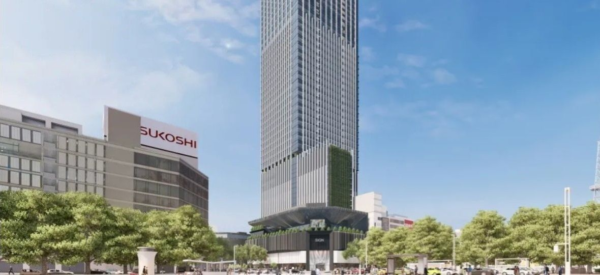
Conrad Nagoya | Opening July
Nagoya has long been one of Japan’s most economically powerful cities – an industrial and manufacturing hub at the heart of Aichi Prefecture – yet it has often been overlooked by luxury travellers. The opening of Conrad Nagoya in July 2026 signals a decisive shift in that perception.
Occupying the uppermost floors of the 41-storey Landmark Nagoya Sakae tower (rendering above), the hotel introduces Hilton’s flagship luxury brand to central Japan for the first time. With direct access to Sakae Station and sweeping city panoramas, the property is designed to appeal to both international business travellers and increasingly affluent leisure guests.
The hotel will feature 170 guestrooms and 29 suites; each reflecting Conrad’s global design language of contemporary refinement layered with local craftsmanship. Textures, materials and art pieces draw inspiration from Aichi’s cultural and industrial heritage, offering a sense of place without resorting to pastiche.
From a trade perspective, Conrad Nagoya represents confidence in Nagoya’s evolution as a premium urban destination. Improved air connectivity, growing culinary credentials and its strategic position between Tokyo and Osaka make the city an increasingly attractive stop – and Conrad’s arrival is likely to accelerate that momentum.
Sapporo: Lifestyle Luxury in the North
Hyatt Centric Sapporo | Opening late 2026
Further north, Hyatt Centric Sapporo marks another important first. Opening in late 2026, it will be the brand’s debut property in Hokkaido, signalling growing confidence in year-round tourism beyond Japan’s traditional “Golden Route.”
Situated near Odori Park in Sapporo’s historic centre, the hotel is designed around panoramic views and a lifestyle-led ethos aimed at culturally curious, experience-driven travellers. Hyatt Centric’s positioning – locally inspired, socially connected and destination-forward – aligns well with Sapporo’s emerging identity as a city of food, festivals and outdoor culture.
For international markets, Sapporo offers a distinct seasonal proposition, from winter snow festivals to summer green escapes. The arrival of Hyatt Centric adds a globally recognisable, design-conscious option to the city’s hospitality mix, supporting broader efforts to disperse inbound tourism more evenly across Japan.
A New Luxury Narrative for Japan
Taken together, these four openings illustrate a broader recalibration within Japan’s luxury hospitality sector. Rather than chasing volume, brands are investing in meaning – in properties that reflect their destinations’ histories, complexities and contemporary realities.
Adaptive reuse, regional expansion and culturally literate design are no longer niche strategies; they are becoming central to Japan’s tourism future. As inbound demand continues to grow, the success of these hotels may well shape how – and where – the next generation of travellers experience Japan.
If you enjoyed or found this story useful, we’d appreciate if you would forward it to a colleague or friend who may also enjoy it. If, on the other hand, a friend shared it with you, welcome! You can get all the latest travel news and reviews from Travel Industry by simply clicking HERE.