


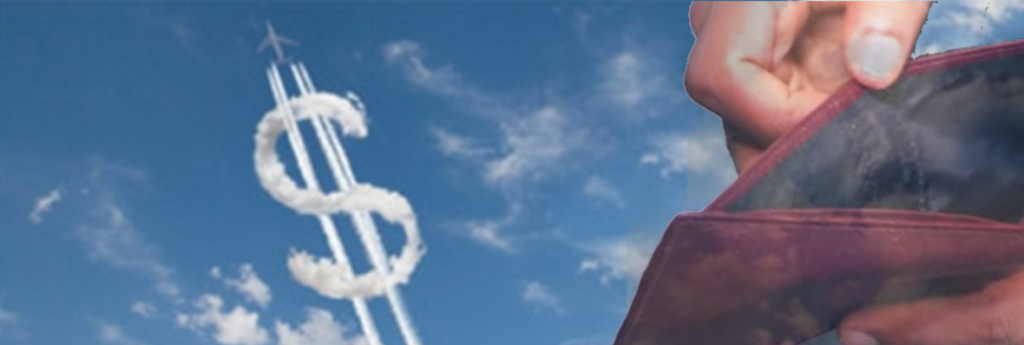
With jet fuel prices rising above $100 as the war in the Middle East disrupts global oil supplies, the cost pressure on airlines intensifies as the summer travel season approaches. Experts say it’s not a question of if airfares will go up, but when, for how long and by how much. The impact may be felt most on long-haul international routes, which burn significantly more fuel than shorter flights.
The global fare hikes have begun as airlines raise fares and add fuel surcharges.
Some airlines outside of the U.S. have announced fare increases or fuel surcharges in an effort to offset the growing expense. In the U.S., United Airlines CEO Scott Kirby recently warned that airfare increases will “probably start quick” as increasing fuel costs work their way through the industry.
In Canada, higher ticket prices are already a reality on some carriers – and expect more to come.
An Air Canada spokesman said, “all airlines are subject to the current volatility” and in response to that unpredictability the price of bookings can fluctuate
As with many airlines Air Canada’s largest expenditure fuel can be almost a quarter of the airlines operating costs — its largest expense.
WestJet spokesperson Julia Kaiser reportedly noted that, “The recent sharp increase due to the situation in Iran has already made operating flights more expensive. Based on this, it’s likely further pricing adjustments may be needed”.
Air Transat has already begun to tack on higher fuel surcharges for flights to Europe as jet fuel prices soar.
“What we’re also doing is currently raising fares on peak travel dates and routes where we see less competition,” Transat A.T. Inc. CEO Annick Guérard told analysts on a conference call last week.
A media spokesperson from Flair Airlines said in an email that the company would not be speculating on future price changes, “as the situation is dynamic and it would be premature to comment.”
Suzanne Acton-Gervais, president of the Association of Canadian Travel Agencies and Travel Advisors (ACTA), said in an email that ACTA is monitoring the situation closely.
“Canadians continue to show strong interest in travel, and what our members are seeing is that travellers remain attentive to value and predictability when making travel decisions,” Acton-Gervais said.
And on the international front
Hong Kong’s Cathay Pacific Airways Ltd. announced fuel surcharges are now included on all passenger tickets, with surcharges for Canada set to double from $101 to $202.60 starting March 18.
Air India and Air India Express are phasing in fuel surcharges across domestic and international routes.
And Air New Zealand said Thursday it would cut around 1,100 flights, or five per cent of capacity, through early May,
The price of jet fuel skyrocketed 81 per cent last week and on Tuesday sat 52 per cent higher than levels from Feb. 27, the day before the U.S. and Israel launched attacks, according to figures from the Platts jet fuel index.
And the reason…
The war is constraining oil exports and prompting major producers like Kuwait, Saudi Arabia and Iraq to scale back output as shipments face growing obstacles.
Iran has attacked commercial ships across the Persian Gulf and targeted oil infrastructure in Gulf Arab nations following U.S. and Israeli strikes. The attacks have effectively halted traffic through the Strait of Hormuz, a narrow passage that carries about one-fifth of the world’s oil supply.
Hedging your bets
Some airlines are partially protected from sudden price spikes through fuel hedging, a strategy that allows them to lock in fuel prices months or even years in advance. But not all airlines hedge, and those that do are usually only protected for a portion of their fuel needs, meaning prolonged price surges may cause more carriers to raise fares.
Cuts and costs
Another issue for airlines: Air space closures have required rerouting flights around parts of the Middle East, which can mean longer routes, additional fuel burn and higher operating costs.
John Gradek, an aviation management lecturer at McGill University, estimated international ticket prices could rise by between $100 and $200 one-way, while domestic flights could get bumped anywhere between $50 and $100.Gradek said airlines will start with cutting or consolidating flights as demand for travel pulls back, and then reducing services, such as drinks and meals, before beginning to park airplanes.
“We’re not far away from that (if) you keep this going for another couple of weeks,” Gradek said. Travellers could start changing their itineraries or cancelling travel plans as well, he added.
“The consumer has to buy the ticket — and if the price gets too crazy, demand will shut down,” he said. “It’s a double whammy for those airlines that are really in financial straits.”
If you enjoyed or found this story useful, we’d appreciate if you would forward it to a colleague or friend who may also enjoy it. If, on the other hand, a friend shared it with you, welcome! You can get all the latest travel news and reviews from Travel Industry by simply clicking HERE.