

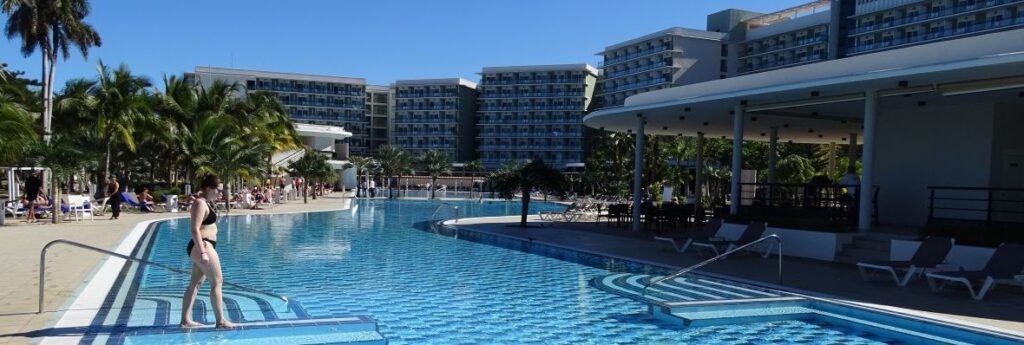
Effective Friday (July 24) Meliá Hotels International says it will terminate all operations in Cuba. The Spanish hotel chain’s portfolio consisted of 34 hotels on the island, some of which had already closed (or transferred to Cuban operators) as part of a partial withdrawal announced in June.
A statement from the company said the decision was due to “the significant operational, legal, economic and financial difficulties that have persistently affected, and continue to affect, the environment” in Cuba.
Cuba’s tourism industry was formerly an engine of the country’s economy. Meliá’s decision follows new sanctions announced by the U.S. on July 13 blacklisting Cuba’s Ministry of Tourism, the business partner of more than a dozen hotels that the hotel chain still operated on the island.
The chain had previously suspended management of 15 hotels it operated through an agreement with a tourism agency run by GAESA, a Cuban military-business conglomerate that was sanctioned by the U.S. in May. The company has now completely withdrawn its business from Cuba.
Meliá once owned 34 five-star hotels in Cuba, primarily in Havana, the country’s capital, and idyllic locations such as the Varadero resort and the main keys. It was also a highly symbolic chain for the island, following the opening of tourism in the Caribbean nation after the collapse of the Soviet Union more than 35 years ago.
U.S. measures against companies operating in Cuba include freezing their assets and seizing their accounts in the U.S. – meaning they can no longer operate in the U.S. financial market – and also travel bans for their shareholders, investors and employees.
The U.S. ramped up pressure on the island following the capture of Venezuela’s then-President Nicolás Maduro in January, seeking the fall of the Cuban government and changes to its political and economic model. It also implemented an energy embargo that has exacerbated a pre-existing crisis.
The result has been daily blackouts lasting more than 20 hours, medicine shortages pushing the healthcare system to the brink, a collapsed water supply and paralyzed transportation.
Meliá’s departure demonstrates the resounding impact of U.S. President Donald Trump’s policies, which are “methodically and systematically closing every source of foreign currency for the Cuban government,” Paolo Spadoni, an associate professor in the Department of Social Sciences at Augusta University in Georgia, told The Associated Press.
Tourism has plummeted with the withdrawal of major chains – such as the Spanish Iberostar and the Canadian Royalton – as well as the cancellation of flights to Cuba by international airlines.
adian airlines and tour operators continue to pause operations to the island and Global Affairs Canada advises against non-essential travel.
In this year’s first trimester, tourism arrivals in Cuba are down 48% compared to the same period in 2015, totaling just 298,000.
Meliá had operated in Cuba for 36 years.
If you enjoyed or found this story useful, we’d appreciate if you would forward it to a colleague or friend who may also enjoy it. If, on the other hand, a friend shared it with you, welcome! You can get all the latest travel news and reviews from Travel Industry by simply clicking HERE.