


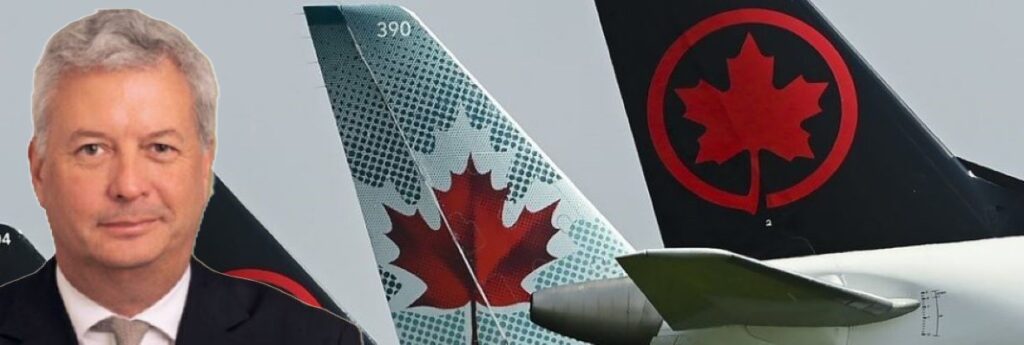
Air Canada says it continues to see strong demand and bookings despite higher fuel-driven fare increases. The Montreal-based airline reported net income of $48 million during the first quarter, compared with a net loss of $102 million during the same period last year.
In an earnings call last week, the airline said it delivered a record first-quarter operating revenue of $5.8 billion, up 11% year-over-year from $5.2 billion. Nevertheless, Air Canada suspended its guidance for the year as jet fuel prices remain volatile due to war in the Middle East and the outlook for those costs in the latter half of the year remained uncertain.
Chief executive Michael Rousseau said that since late February, the situation in the Middle East and rising jet fuel prices have created an external shock for the industry.
“The pace of that increase is testing demand resilience across commercial aviation and reinforcing the need for discipline. This is not unique to Air Canada; it is an industry-wide challenge that affects how airlines think about capacity, pricing and risk,” he said.
“In this environment, our focus is on staying flexible, making deliberate decisions, and managing the business to prioritize returns and protect cash flow and balance sheet strength.”
Air Canada offered an outlook for the second quarter in light of the suspended full-year guidance.
The airline’s second-quarter guidance reflects an expectation to offset between 50 and 60% of the estimated incremental fuel expense through commercial and cost actions, Rousseau said.
About 20% of the world’s crude supply typically passes through the Strait of Hormuz, a narrow waterway connecting the Persian Gulf with the open sea. But tanker traffic there has all but halted since late February, when the U.S. and Israel began their strikes on Iran. There’s been virtually no change in that situation despite the ceasefire announced three weeks ago.
The supply constraints have driven up crude oil prices, as well as derivatives such as jet fuel.
Skyrocketing jet fuel costs have threatened to push airfares higher.
Earlier this month, Air Canada announced higher baggage fees – to $45 from $35 for the first checked bag in its basic economy class on domestic, U.S. and sun destination flights, for example.
“Looking ahead, we are diligently managing an evolving geopolitical and macroeconomic landscape. Air Canada was one of the first airlines to implement fare increases as the crisis unfolded,” Mark Galardo, Air Canada’s chief commercial officer, said on the earnings call.
The airline also previously confirmed plans to suspend flights, including to New York City’s JFK airport from Toronto and Montreal between June 1 and Oct. 25.
Carriers across the globe have had to trim their flight schedules as ballooning fuel costs render some routes unprofitable.
North American carriers draw largely from refineries in Canada and the U.S. and remain more insulated from the fuel shortages than Gulf-dependent Asia and Europe, but they may find connecting options more limited as airlines abroad cut trips that are less lucrative and ground planes that are less efficient.
If you enjoyed or found this story useful, we’d appreciate if you would forward it to a colleague or friend who may also enjoy it. If, on the other hand, a friend shared it with you, welcome! You can get all the latest travel news and reviews from Travel Industry by simply clicking HERE.