



Quintonil is not your typical Mexican restaurant. Clients book tables months in advance to celebrate special occasions. The World’s 50 Best list ranked it as the most acclaimed venue in the country in 2024 – and No. 7 worldwide. But once in a while something unexpected happens: food brings guests to tears.
“We have hosted people who have wept over a tamale,” said chef Jorge Vallejo, who founded Quintonil in Mexico City in March 2012. He intentionally chose traditional street food for the menu – insects and other pre-Hispanic delicacies included. Priced at 4,950 pesos (US$250) per person, it evokes the nostalgia of home and the history of the homeland.
The tamale – which translates from the Nahuatl language as “wrapped” – is a Mesoamerican delicacy made of steamed corn dough. It can be filled with savory or sweet ingredients – such as pork meat and pineapple – and topped with sauce.
Official records show that around 500 varieties of tamales can be found in Mexico. And according to a publication of Samuel Villela, ethnologist from the National School of Anthropology and History, Nahua communities used them for ritual purposes.
Most of Vallejo’s clientele are foreigners attracted by the two Michelin stars awarded to Quintonil last year. Others are nationals who spent decades living abroad or Americans of Mexican descent in search of a taste from their ancestry.
“They come to visit their families and feel shaken by the flavours that remind them who they are,” the chef said. “It’s like coming back to their roots.”
Providing that experience is what motivated him to open Quintonil 13 years ago. He first thought of his 11-table restaurant as a “fonda,” as Mexicans call popular food venues offering homemade dishes.
“I didn’t think I would own a restaurant like Quintonil nor did I aspire to that,” Vallejo said. “What I’ve tried to do is to learn from Mexico and show the best of it. In Mexico, we have ecosystems and ingredients that don’t exist anywhere else. And our recipes, our traditions, are deeply rooted in society.”
His menu at Quintonil often incorporates insects, treasured since pre-Hispanic times.
Ancient documents describe how the Mexica were once established in the Chapultepec Hill. Its name comes from “chapulín,” a type of grasshopper that Mexicans currently enjoy from street vendors or at popular bars known as “cantinas.”
“In Mexico City, we have ‘escamoles’ season,” Vallejo said, referring to an edible larvae the Aztec people ate. “But in Oaxaca, we can find the ‘chicatana’ ants. In Tlaxcala, ‘cocopaches’ (a leaf-footed bug) and in Guerrero, they have insects of their own.”
Alexandra Bretón, a food enthusiast who has visited Quintonil several times and reviews restaurants in her blog “Chilangas Hambrientas,” feels that Vallejo’s contribution to Mexican gastronomy is invaluable.
“He has elevated Mexican ingredients,” Bretón said. “My memories of Quintonil are of dishes where herbs, insects and vegetables are taken seriously in dishes with great technique.”
During her last visit in February, she tasted a delicious tamale filled with duck. Her second favorite was a taco, which can be found at thousands of food spots, but Vallejo somehow transforms into an experience.
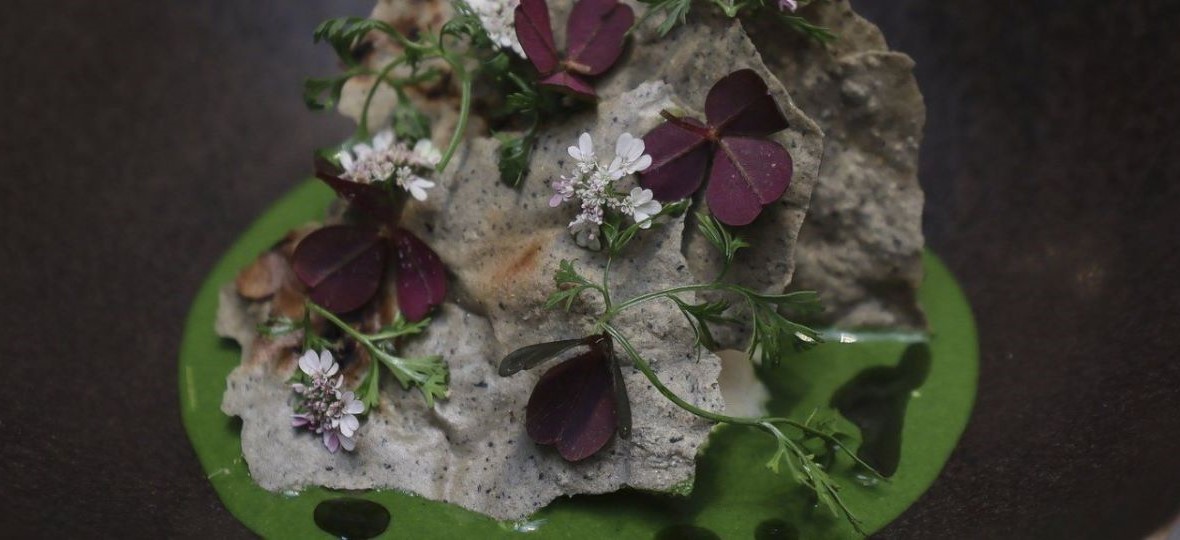
“What we do here are not just beautiful plates,” said Geraldine Rodríguez, Quintonil’s sous chef. “We aim to nourish people, to show what Mexico is.”
There was a time, she said, when fine dining was synonymous of foie gras and lobster. But Quintonil chose another path.
“We have an ancestral cuisine that comes from our grandmothers,” Rodríguez said. “So, we respect those recipes and add the chef’s touch.”
The taco experience highlighted by Bretón is among those efforts. Several ingredients – insects, for instance – are offered in plates for clients to wrap in tortillas.
“Through that interaction, that ritual that we Mexicans own, we watch clients wondering if they’re grabbing the taco in a proper way,” Rodríguez said. “But we always tell them we just want them to feel at home.”
Vallejo has often expressed joy for the recognition that Quintonil has achieved. But in his view, a chef’s true success is measured by what he make his clients feel.
“Mexican cuisine is a connection to the land, to the ingredients,” he said. “It’s a series of elements that produce not an emotion, but a feeling. And for me, there’s nothing more amazing than provoking that.”
If this article was shared with you by a friend or colleague, you may enjoy receiving your own copy of Travel Industry Today with the latest travel news and reviews each weekday morning. It’s absolutely free – just CLICK HERE.