


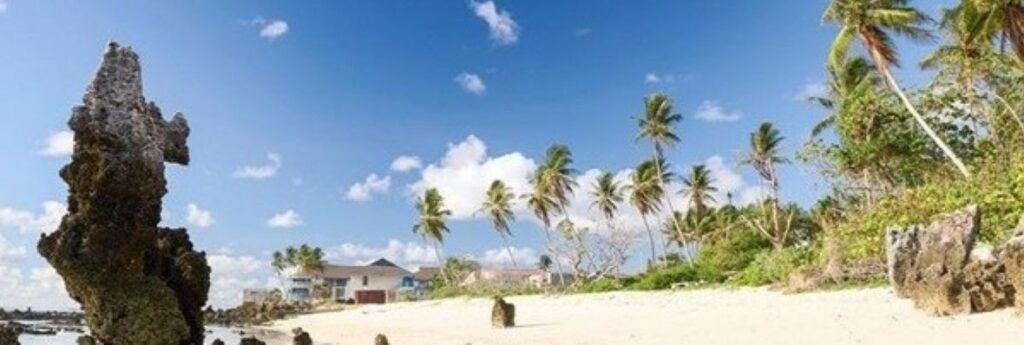
If you have any clients headed for the tiny Pacific island of Nauru, be aware that the country – the world’s third smallest – has changed its name to the Republic of Naoero, matching the spelling and pronunciation in the national language.
The country’s international code will change from NRU to NRO and its people will be known as dei-Naoero instead of Nauruan. Commonly known abroad by the pronunciation of Now-roo, the new name is spoken as Now-ero.
The move would return the remote South Pacific island nation to its traditional name, a statement posted to the government’s Facebook account said. The country became known internationally as Nauru only because its local name was difficult for foreigners to pronounce and was a matter of convenience rather than one of choice, according to an earlier government statement.
“This proposed change seeks to more faithfully honour our nation’s heritage, our language, and our identity,” President David Adeang said when he proposed the move to Parliament in January. The suggested constitutional amendment has been endorsed by lawmakers in the requisite two rounds of voting, though it wasn’t immediately clear if the document had been formally amended.
With 12,000 residents, Nauru is the world’s third-smallest country by population size, after Tuvalu and Vatican City. The tiny coral limestone atoll was colonized by Germany and later administered by Australia before becoming an independent republic in 1968.
It has faced tumultuous circumstances, with phosphate mining creating huge wealth on the island in the 1970s before the industry collapsed, bringing Nauru to the brink of economic ruin in the 1990s.
Now, the country is one of the world’s most at risk from rising seas due to climate prompting the government to seek overseas investment through a paid citizenship program intended to fund the movement of people and infrastructure away from the encroaching ocean.
The name change indicated “the beginning of renewed national pride,” Adeang said in his announcement. When his government last voted for the move in May, the president announced a referendum to confirm it.
The government said in last week’s statement that after “extensive discussions,” lawmakers had decided a public vote wasn’t needed.
“While a referendum is intended to determine the will of the people, the name Naoero has never been lost, but rather waiting to be fully embraced,” the statement said.
The designation “is already the identity of the people, is on the national coat of arms, and spoken in the community; and importantly is allowed by the Constitution,” it added.
The move makes the country the latest to signal a shift away from a colonial past by changing its name. The tiny African kingdom of Eswatini reverted to its historic name from Swaziland in 2018. Other countries have sought the switch as a sort of rebrand, as Turkey did when Ankara asked the United Nations in 2022 to begin calling the country Türkiye, which the nation had long gone by at home.
Nauru’s decision will prompt the renaming of its national aircraft and ships. The government was already seeking to have other countries and international institutions recognize the shift, its statement said.
The website of the United Nations records the country by its new name, noting the government had requested it be changed in June. Australia and New Zealand’s foreign ministries as well as the U.S. and Chinese embassies in the region also designate the country as Naoero on their websites.
Located 2,500 km northeast of Australia, the island is accessible only from on Nauru Airlines, with routes mainly from Brisbane, Nadi (Fiji), and Tarawa (Kiribati). No ferries or cruise ships serve the island.
“Home to just over 12,000 residents, Nauru offers a unique blend of traditional Micronesian culture and modern aspirations,” Nauru Economic and Climate Resilience Citizenship Program, says on its website. “Our island, once known as Pleasant Island, has witnessed centuries of history, from early Micronesian settlements to its strategic importance during World War II and its journey to independence in 1968.
“At NauruIsland.org, we are inviting the world to discover the warmth, resilience, and quiet beauty of our people and land.”
If you enjoyed or found this story useful, we’d appreciate if you would forward it to a colleague or friend who may also enjoy it. If, on the other hand, a friend shared it with you, welcome! You can get all the latest travel news and reviews from Travel Industry by simply clicking HERE.