


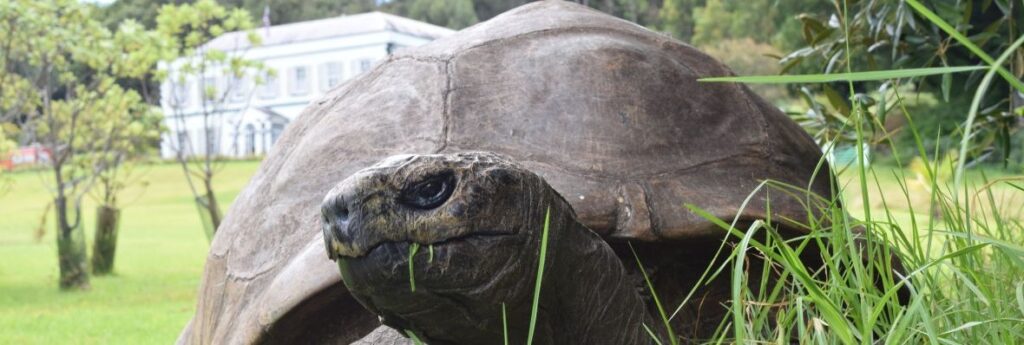
By CINDY-LOU DALE/ In a world obsessed with speed, there is one remarkable creature who has spent almost two centuries proving that life’s greatest journeys are never rushed. His name is Jonathan and he has witnessed the reign of eight British monarchs, survived two World Wars, seen the invention of the telephone, motor car, aeroplane and internet, and quietly grazed his way through almost 200 years of history.
Estimated to be 193 years old in 2026, Jonathan, a Seychelles giant tortoise, is officially recognized by Guinness World Records as the world’s oldest known living land animal. Yet despite international fame, he remains blissfully unaware that thousands of visitors make the pilgrimage each year to meet him in one of the world’s most isolated destinations.
That destination is St. Helena.
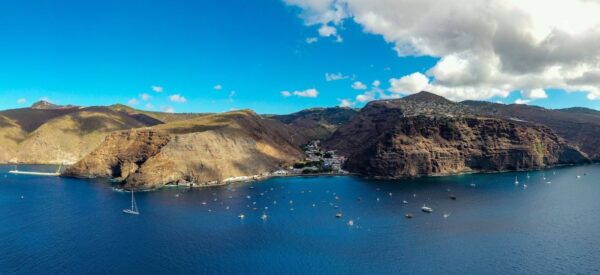
Rising dramatically from the middle of the South Atlantic Ocean, nearly 2,000 km west of Africa and almost 3,000 km east of South America, this tiny volcanic island feels as though it exists outside time itself. Home to fewer than 5,000 people, St. Helena is one of those increasingly rare places where there are no crowds, no traffic jams, no towering resorts and no pressure to do anything except slow down.
For travellers seeking authentic experiences rather than tourist attractions, it is one of the most rewarding islands on Earth.
Jonathan: A Living Piece of History
Jonathan is believed to have hatched around 1832 on the Seychelles before being brought to St. Helena in the late nineteenth century as a gift to the island’s governor.
Today he lives in the beautifully maintained grounds of Plantation House, the elegant Georgian residence of the Governor of St. Helena, where visitors are welcome to meet the island’s most celebrated resident.
Although advancing age has left him almost blind and without a sense of smell, Jonathan continues to enjoy remarkable health. His veterinary carers prepare specially selected fruit and vegetables to supplement the grass he still grazes every day, while his leisurely strolls across the lawns have become something of a daily ritual.
Standing beside him is a surprisingly emotional experience.
This gentle giant has silently witnessed history unfolding while remaining entirely unchanged by it. Long before commercial aviation connected continents, before the Suez Canal transformed global trade, before electricity illuminated cities, Jonathan was already slowly making his way around the gardens of Plantation House.
He has become far more than an ageing tortoise. Jonathan is St. Helena’s living ambassador – a symbol of resilience, longevity and the extraordinary pace of island life.
The Island That Once Held an Emperor
Long before Jonathan became famous, St. Helena occupied one of the most strategically important positions in the world.
Discovered by Portuguese navigator João da Nova in 1502, the island remained uninhabited until the English East India Company established a permanent settlement in 1659. For more than two centuries it became an indispensable resupply station for sailing ships travelling between Europe, Africa and Asia.
Fresh water, fertile valleys and natural shelter transformed this isolated volcanic outcrop into one of the busiest ports in the South Atlantic.
Its greatest moment in history, however, arrived in 1815.
Following his defeat at the Battle of Waterloo, Napoleon Bonaparte was exiled here by the British Government. There could hardly have been a more secure prison. Surrounded by thousands of kilometres of open ocean and heavily guarded by British warships, escape was virtually impossible.
Napoleon spent the final six years of his life at Longwood House, where visitors today can walk through the carefully preserved rooms in which he lived, worked and eventually died in 1821.
Nearby lies the peaceful valley where he was originally buried before his remains were returned to Paris almost twenty years later.
For history lovers, St. Helena offers one of the world’s most remarkable historical pilgrimages, yet unlike many famous heritage sites, visitors often find themselves exploring entirely alone.
Nature’s Best-Kept Secret
History may draw visitors to St. Helena, but nature persuades them to stay.
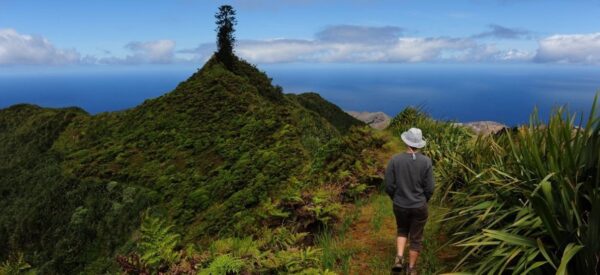
Born of volcanic fire millions of years ago, the island rises dramatically from the Atlantic in a spectacular series of basalt cliffs, emerald valleys and cloud-shrouded peaks.
Its isolation has created one of the planet’s most fascinating ecosystems. More than 500 species are found nowhere else on Earth, including rare plants, insects and birds that evolved in complete isolation over millions of years.
The island’s highest point, Diana’s Peak National Park, is a lush cloud forest where tree ferns, ebony trees and endemic flora thrive in cool mountain mist. Hiking trails weave through landscapes that bear little resemblance to the barren cliffs visible from the coastline below.
Marine life is equally extraordinary.
Each southern summer, whale sharks – the largest fish on Earth – gather in the warm surrounding waters, making St. Helena one of the few places where travellers can safely snorkel alongside these gentle giants. Dolphins frequently accompany boats leaving the harbour, while humpback whales pass offshore during their annual migrations.
For divers, pristine volcanic reefs and historic shipwrecks offer exceptional underwater exploration, while anglers are drawn by world-class sport fishing.
Jamestown: Britain’s Georgian Outpost in the Atlantic
The capital, Jamestown, is unlike any other British settlement. Nestled within a steep volcanic gorge, colourful Georgian houses line narrow streets where palm trees sway beside churches, museums and former East India Company buildings.
The town’s most recognizable landmark is Jacob’s Ladder. Originally built in 1829 as an inclined railway to transport supplies to Ladder Hill Fort, only the staircase remains today. Its 699 steep steps rise almost vertically above the town, rewarding those who reach the summit with breathtaking views across Jamestown, the harbour and endless Atlantic Ocean.
Life here unfolds at a wonderfully gentle pace. Local cafés serve freshly caught fish alongside St. Helena coffee – one of the world’s rarest and most distinctive coffees – while friendly residents happily stop for conversation with visitors, many of whom quickly discover that everyone seems to know everyone else.
Why St. Helena Matters Today
For decades, simply reaching St. Helena was part of the adventure. Until 2017, almost every visitor arrived aboard the RMS St. Helena, a five-day sea voyage from Cape Town that reinforced the island’s reputation as one of the world’s most inaccessible destinations.
The opening of St. Helena Airport transformed accessibility without sacrificing exclusivity. Today, regular flights from Johannesburg, together with seasonal services from Cape Town, have made the island achievable for adventurous travellers while carefully limiting visitor numbers to preserve its fragile environment.
This measured approach to tourism has protected the very qualities that make St. Helena so special. Visitors come not for nightlife or shopping malls but for silence, spectacular landscapes, genuine hospitality and the rare feeling of discovering somewhere that tourism has yet to overwhelm.
Where to Stay
- Luxury: Mantis St. Helena
Occupying an elegant 18th-century building in the heart of Jamestown, Mantis St. Helena is the island’s flagship hotel. Beautifully restored interiors blend Georgian heritage with contemporary comfort, while its restaurant showcases local seafood and island produce. It is the ideal base for travellers wanting guided excursions to Plantation House, Longwood House and the island’s spectacular hiking trails.
- Mid-Range: Richards Travel Lodge
Offering spacious accommodation and genuine island hospitality, Richards Travel Lodge has earned a loyal following among independent travellers. Its central location provides easy access to Jamestown’s historic attractions, restaurants and tour operators, making it an excellent choice for visitors wanting comfort without luxury prices.
- Budget: Hotel Consulate
Set inside a charming Georgian townhouse, Hotel Consulate proves that budget accommodation needn’t lack character. Comfortable rooms, friendly service and a prime location make it particularly popular with hikers, divers and history enthusiasts looking to maximise their time exploring the island.
Why Travel Advisors Should Put St. Helena on Their Radar
For travel professionals, St. Helena represents one of the few genuinely undiscovered destinations still available to international clients. It is ideally suited to affluent experiential travellers, repeat visitors to Africa, wildlife enthusiasts, walkers, divers, photographers and history lovers seeking something beyond conventional safari or beach holidays. It also works exceptionally well as a post-safari extension from South Africa, particularly for clients visiting Cape Town or the Western Cape.
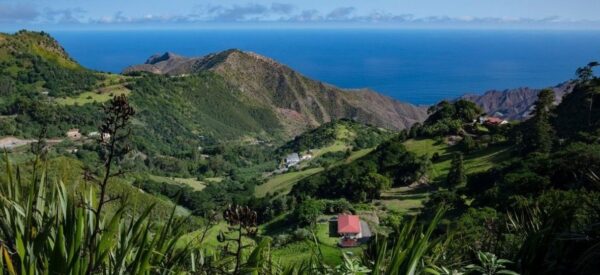
Jonathan alone provides an unforgettable story that instantly captures clients’ imaginations, but it is the island’s combination of Napoleonic history, endemic wildlife, spectacular scenery and authentic community life that consistently exceeds expectations.
As travellers increasingly seek meaningful, low-volume destinations with strong conservation credentials, St. Helena stands out as one of the South Atlantic’s greatest hidden treasures.
Two Centuries in the Making
Meeting Jonathan is unlike any wildlife encounter. There are no barriers, no performances and no sense of spectacle. Instead, visitors stand quietly beside a creature whose lifespan stretches almost beyond comprehension.
Around him, governors have come and gone. Empires have risen and fallen. Steamships gave way to jet aircraft, telegrams to smartphones and paper maps to satellite navigation.
Jonathan has simply continued doing what he has always done –moving slowly beneath the South Atlantic sun.
In many ways, he embodies St. Helena itself. Patient. Enduring. Entirely unhurried.
For travellers willing to venture beyond the familiar, few destinations offer such a powerful reminder that the greatest luxury in modern travel is not extravagance but perspective. On St. Helena, time is measured differently. And after meeting Jonathan, you may find yourself wishing the rest of the world moved a little more slowly too.
If you enjoyed or found this story useful, we’d appreciate if you would forward it to a colleague or friend who may also enjoy it. If, on the other hand, a friend shared it with you, welcome! You can get all the latest travel news and reviews from Travel Industry by simply clicking HERE.