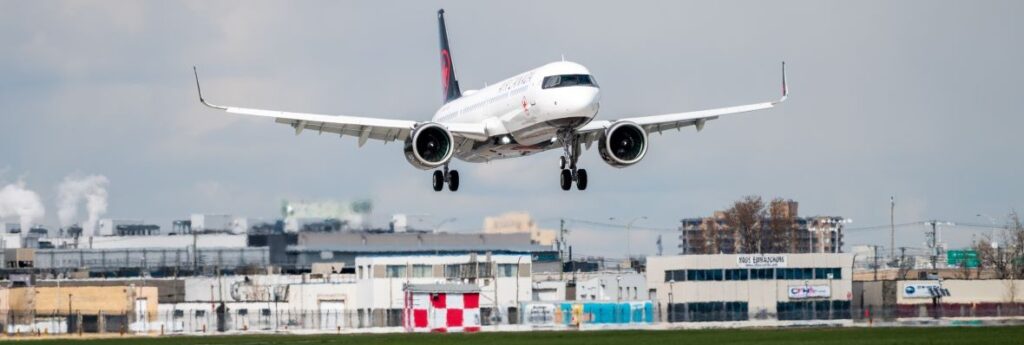
Great planes deserve great destinations (and vice versa), so it’s no surprise that Air Canada’s new Airbus A321XLR aircraft made its international debut en route to Toulouse, France, on June 15, flying from YUL Montréal-Trudeau airport to Toulouse-Blagnac Airport (TLS).
The airline says the introduction of the 182-seat aircraft begins a new chapter in where – and how – its customers can fly.
“Air Canada is building one of the most capable fleets in the industry. The entry into service of the first Airbus A321XLR marks a transformative moment for Air Canada and the beginning of an exciting new era for our customers, industry partners, and colleagues,” says Mark Galardo, Executive VP and CCO, and President of Cargo at Air Canada.
The state-of-the-art plane will “unlock new destinations, improve service on existing markets, and enhance the onboard experience,” he added.
“As the first airline in Canada to operate the A321XLR, Air Canada is showcasing true leadership in fleet modernization,” said Colin, Bole, Sr. VP Customers, North America, Airbus. “This aircraft is the perfect tool to support their network growth, seamlessly bridging the gap between short-haul and long-haul operations while delivering a 30% reduction in fuel burn per seat and the ability to operate with up to 50% neat Sustainable Aviation Fuel.
“We are proud to see our next-generation technology support Air Canada’s ambitions and operate on both new and already-existing non-stop transatlantic markets like Montréal to Toulouse in a more sustainable way.”
The new aircraft also allows Air Canada to be more efficient by having faster turnaround times and getting the aircraft back in the air, because it’s “meant to fly, not to be on the ground.” A faster, more efficient boarding process will improve the customer experience and ensure on-time departures.
New look and feel
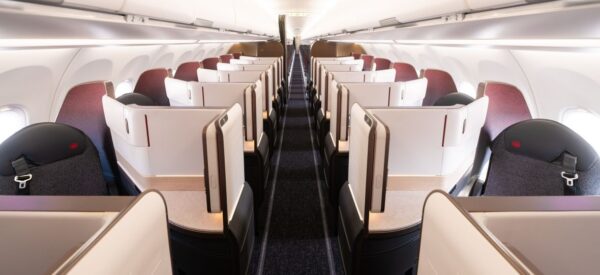
The A321XLR is the launch platform for many of the new features that customers will see across the Air Canada fleet, including exuding a new look and feel – dubbed ‘Glowing Hearted’ – in the cabin that will be rolled out across the entire Air Canada fleet.
For premium customers, the A321XLR will offer the only lie-flat seats on a single-aisle aircraft for a Canadian carrier.
It will also feature personal device power at every seat; fast, free Wi-Fi for Aeroplan Members, United MileagePlus® members and Business Class passengers sponsored by Bell; next-generation in-flight entertainment screens that are larger and offer Bluetooth connectivity; and thoughtfully curated cabin finishes inspired by the Canadian landscape and aligned to the airline’s brand and commitment to enduring quality.
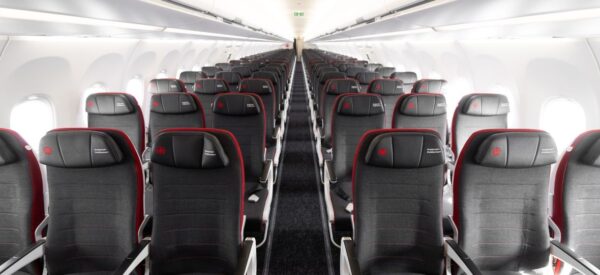
In addition to the 14 lie-flat seats in Air Canada Signature Class, the A321XLR has 168 Economy class seats, with every seat featuring seatback in-flight entertainment with 4K OLED IFE screens (13-inch in Economy, 19-inch in Signature Class) with Bluetooth audio.
Fleet modernization
The arrival of the A321XLR is an important milestone and the latest step in Air Canada’s multi-year fleet modernization program, which is focused on customer experience, operational resilience and fuel efficiency improvements versus older-generation aircraft. It reflects the airline’s commitment to prudent growth, continuous product investment, and disciplined execution of Air Canada’s business plan.
Following Toulouse, next up internationally for the aircraft will be Berlin and Nantes over the summer.
In addition to 30 A321XLRs (15 will be leased, 15 are being acquired directly from Airbus S.A.S) that are expected to enter the fleet over the coming years, Air Canada has announced orders for 14 Boeing 787-10 Dreamliners as well as eight A350-1000s. It also continues to take deliveries of the Canadian-built Airbus A220, with 21 aircraft remaining on its firm order of 65. Five Boeing 737 MAX aircraft have already been delivered in 2026.