

Cuba is prepared for a fight with the United States and is praising Canada for its humanitarian aid, said a senior diplomat visiting Ottawa from Havana this week.
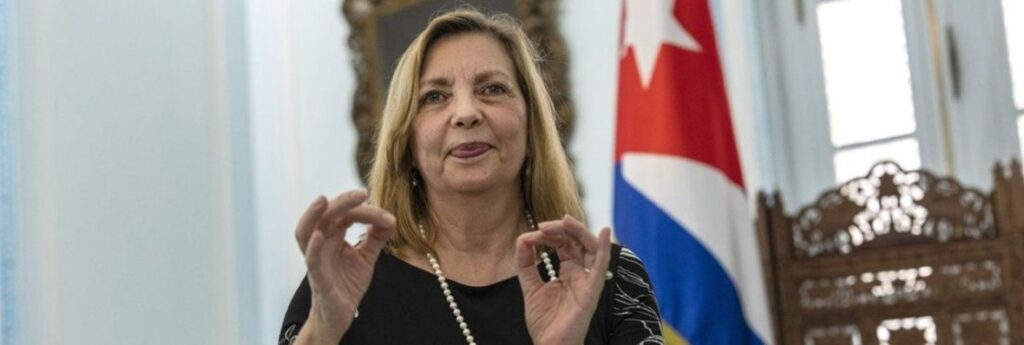
“We would never want a conflict with the United States, but we are very conscious about the threats, and we are getting ready to defend our country,” Josefina Vidal, Cuba’s deputy minister of foreign affairs, stated.
In an exclusive interview with The Canadian Press, Vidal said “U.S. coercive measures on our economy” are also affecting Canadian firms.
“The United States has been subjecting the whole Cuban people to a collective punishment,” she said. “Nothing justifies the United States to submit Cuba and the Cuban people to such harsh measures.”
U.S. President Donald Trump has for months imposed an effective oil blockade on Cuba, cutting off Venezuelan shipments and threatening tariffs on countries that sell oil to the island nation. In May, Washington issued secondary sanctions on foreign firms doing business in Cuba.
Vidal said she visited Canada this week to meet with government officials, parliamentarians and corporations to “start a conversation” on how to respond to the new American policy.
“Canada has always been a very important economic partner for Cuba in terms of trade, investment, co-operation, development co-operation. So, Canada’s interests, and many other countries’ interests, are being affected as well as a result of this new measure,” she said.
“No government, no country has the right to impose on others with whom they (can) trade with.”
Canadian hospitality company Blue Diamond Resorts ended its operations in Cuba last month, something Vidal blamed on the secondary sanctions. Toronto-based mining corporation Sherritt International reduced operations in Cuba in February, citing fuel constraints.
Cuba has faced an economic crisis since 2020 that has been compounded by U.S. sanctions, leading to critical shortages and severe blackouts that peaked in early 2026.
Because Cuba produces only 40% of its required fuel, it remains highly vulnerable to external blockades. Vidal said the U.S. is trying to wreak havoc through the fuel embargo.
“The purpose behind that measure is to push us Cubans and Cuba into a humanitarian crisis,” she said.
Canada and global organizations say that crisis has arrived already, while Vidal said Cuba is coping thanks to its fuel reserves.
“It has deteriorated and aggravated the living conditions of the Cuban people,” she said, citing reduced business hours, postponed surgeries, water shortages and schools closing or turning to remote learning.
Air Canada and other airlines suspended flights to Cuba in February because of the shortage of aviation fuel on the island.
Vidal said Cuba’s tourism sector was already reeling from an American policy that can block Europeans from entering the U.S. without an American visa if they have visited Cuba since 2021.
Officials in Trump’s administration have suggested economic pressure could topple the communist regime.
Many have warned that Washington might try to extract Cuban officials in a raid similar to the brazen January capture of Venezuela’s then-president Nicolas Maduro. The U.S. has framed that action as a law enforcement operation.
“There are really threats of military action against Cuba, so it’s public,” Vidal said. “We cannot ignore it. That’s why Cuba is getting ready.”
Vidal was the lead negotiator with the Obama administration leading up to the 2014 thaw in bilateral relations that led to the reopening of embassies in Havana and Washington and the return of some American tourists. She said Cuba believes in peace but talks with the U.S. have not been very fruitful.
“We address this dialogue in very responsible and serious way,” she said. “I have to admit that there is not a lot of progress, if I might say, in this dialogue. But we still believe that this is the only alternative, and the only option for us to look for solutions.”
She said Canadians know Cuba better than any other country because so many have visited the island and think of close friends there as family.
“We would love to see Canadians going back to Cuba,” Vidal said, praising Ottawa’s aid packages.
“Canada has been a part of the group of countries which have (extended) their hands to Cuba at a very difficult moment, and we appreciate it. It’s very much appreciated.”
In February, Canada pledged $8 million in food aid to Cuba, to be delivered through United Nations agencies, and another $5.5 million in April to address “urgent needs” in the country.
On June 11, Global Affairs Canada official Mark Richardson told the Senate that aid has included solar panels to help power critical infrastructure, such as medical clinics.
If you enjoyed or found this story useful, we’d appreciate if you would forward it to a colleague or friend who may also enjoy it. If, on the other hand, a friend shared it with you, welcome! You can get all the latest travel news and reviews from Travel Industry by simply clicking HERE.