


Films, series and music tours are increasingly shaping destination choices, turning cultural content into measurable travel demand, according to new data from Civitatis. Travellers are increasingly choosing destinations based on what they watch, listen to and engage with digitally, says the activities booking platform.
A recent surge in global interest in South Korea following the cultural impact of KPop Demon Hunters reflects the broader structural shift:
“We are seeing a clear evolution from inspiration to conversion,” said Andrés Spitzer, CEO of Civitatis. “Cultural trends have become one of the most powerful drivers of travel demand. Content is no longer just influencing where people want to go – it is actively shaping real travel decisions and travel flows.”
He added: “For destinations and travel brands, understanding this relationship between culture and tourism is no longer optional, it is strategic.”
Set-jetting moves from niche to mainstream
The phenomenon of “set-jetting” – travelling to destinations featured in films and TV series – is not new, but it is becoming increasingly mainstream and commercially relevant.
Long-running cultural franchises continue to generate sustained tourism demand:
- Gladiator continues to drive visits to Rome’s Colosseum more than two decades after its release.
- Outlander has driven a +43% increase in activity bookings in Scotland in 2025, with dedicated tours growing nearly +35% year-on-year.
- Game of Thrones continues to support destination demand in Dubrovnik and Belfast, with additional interest expected ahead of new franchise releases such as A Knight of the Seven Kingdoms.
Long-standing franchises also play a crucial role in stabilizing tourism interest over time:
- Harry Potter continues to be a major demand driver in London, with bookings for the studio tour increasing nearly +15% in 2025 versus the previous year.
- Interest is expected to grow further with the 25th anniversary of the first book in 2026 and the launch of the new series this year.
Music tourism becomes a real-time demand accelerator
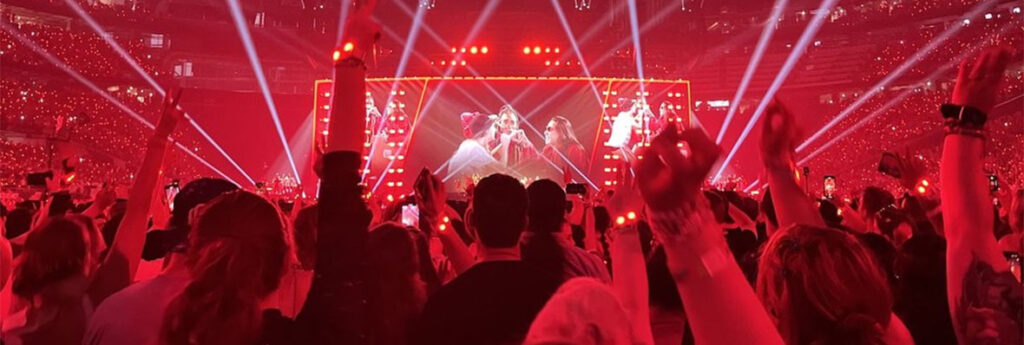
Among all categories, music is emerging as one of the most immediate and measurable drivers of travel demand, with booking spikes closely aligned to tour announcements and concert dates.
Today, travellers are increasingly designing entire trips around live music experiences, combining concerts with city breaks, cultural activities and extended stays.
Recent examples include:
- Taylor Swift (The Eras) Tour was one of the most widely attended cultural events of the century (2024) The 21 month tour attracted over ten million attendees, and grossed approximately $2.2 billion, becoming the highest-grossing tour of all time. The tour generated increases in travel demand, hospitality activity, and consumer purchases in each city it reached. Toronto alone got a $282 million “Swift Lift”.
- Coldplay (Europe tour): Concert dates in Budapest generated a +65% increase in activity bookings during the event window. Other cities also saw strong impacts, including Munich (+119% YoY) and Athens (+106% YoY).
- Ed Sheeran (Madrid, 2025): Concert dates drove a +23% increase in bookings compared to the same period in 2024.
- Bad Bunny (Puerto Rico): The impact of global tours in long-haul destinations is even more pronounced, with bookings increasing +234% in 2025 versus 2024, and a fivefold year-on-year increase in early 2026.
These patterns highlight how quickly destinations can become globally relevant when linked to cultural moments – and how demand often extends beyond the event itself.
From viral moments to structural tourism shifts
According to Civitatis, the growing influence of cultural drivers on travel is no longer limited to iconic filming locations or landmark events. Instead, it is evolving into a broader structural shift in how people discover and experience destinations.
The impact of content-driven travel is also becoming more distributed across destinations and experiences – from gastronomy and wellness to cultural immersion – supporting a more diversified and, potentially, more sustainable tourism model.
“Culture is no longer a peripheral influence,” said Spitzer. “It is becoming a central driver of how and why people travel, reshaping demand patterns across the global tourism ecosystem.”
If you enjoyed or found this story useful, we’d appreciate if you would forward it to a colleague or friend who may also enjoy it. If, on the other hand, a friend shared it with you, welcome! You can get all the latest travel news and reviews from Travel Industry Today by simply clicking HERE.