


By CINDY-LOU DALE/ Tokyo’s food is layered: Edo pragmatism, Meiji experimentation, post-war reinvention. These 15 dishes trace the capital’s culinary DNA – but they are only a beginning. In Tokyo, every neighbourhood writes its own menu.
Tokyo is a city that eats with memory. Beneath its neon skyline lies Edo – the mercantile powerhouse of 1603-1868 – where speed, seasonality and bold seasoning shaped a cuisine built for workers, traders and travellers. When the Meiji Restoration opened Japan to the West, Tokyo absorbed foreign influence without losing its identity, creating hybrids that are now as Japanese as soy sauce. These 15 dishes tell that story – practical, inventive, distinctly Tokyo.
- Abura Soba
Born in the 1950s in Tokyo’s university districts, abura soba rejects ramen orthodoxy: no broth, no ceremony. Instead, wheat noodles sit over a slick of soy sauce, rendered pork fat and seasoning. The heat from the noodles emulsifies the sauce when stirred, coating each strand in glossy umami. Toppings are deliberately spare – chashu, bamboo shoots, nori, scallions, soft egg – allowing the diner to customize with vinegar or chilli oil. It is ramen reduced to its essentials: fat, salt, texture.
Where: Chinchintei; Tokyo Abura Soba (multiple locations).
- Chankonabe
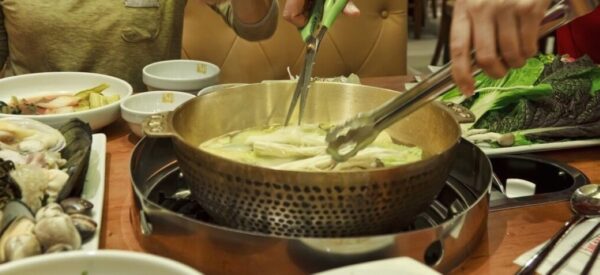
In Ryogoku, the spiritual home of sumo, chankonabe is not a novelty – it is fuel. Wrestlers eat it daily, often in vast communal pots. The broth varies by stable: chicken-based for clarity and protein, or dashi-forward for depth. Mountains of cabbage, leeks and tofu soften into sweetness, while chicken meatballs or seafood absorb the stock. Traditionally, junior wrestlers cook; seniors eat first – hierarchy enforced at the table.
Where: Chanko Kawasaki, Chanko Edosawa, Chanko Kirishima in Ryogoku.
- Sakuramochi
Invented in 1717 by a gatekeeper at Chōmei-ji Temple, sakuramochi captures spring in a single bite. A pale pink rice cake conceals smooth red bean paste, wrapped in a salted cherry leaf that perfumes the sweet with faint bitterness. The leaf is edible – and meant to be eaten. The contrast is the point.
Where: Yamamoto-ya (Chōmeiji Sakuramochi).
- Gunkanmaki
Created in 1941 at Ginza Kyubey, gunkanmaki solved a structural problem: how to serve loose toppings like sea urchin or salmon roe. A band of nori forms a small edible wall around vinegared rice – a “warship” built for the sea’s most fragile cargo. Its invention marked sushi’s move from preservation technique to refined craft.
- Shōyu Ramen
Tokyo’s original ramen style dates to 1910 and the now-closed Rairaiken. Its defining feature is clarity: a dark soy broth layered over pork and chicken stock, aromatic rather than heavy. The noodles are thin and slightly curly, designed to trap broth; toppings are balanced rather than abundant. It is restraint, not excess, that defines Tokyo ramen.
Where: Menya Shichisai; Yakumo; Tsuta (the first Michelin-starred ramen shop).
- Taiyaki
Introduced in 1909 at Naniwaya Sohonten, taiyaki reshaped the humble pancake into a sea bream – a symbol of prosperity. The moulded batter forms a crisp shell around molten red bean paste. Modern fillings range from custard to cheese, but the pleasure remains tactile: crackling exterior, soft centre, steam escaping on first bite.
- Katsudon
A breaded pork cutlet, simmered briefly with egg and sweet soy sauce, served over rice. Born of Meiji-era Western influence, katsudon became comfort food for students – katsu meaning both cutlet and victory. The dish balances crunch and softness: crisp panko yielding to custardy egg.
Where: Kinjo-an near Waseda University.
- Tsukemen
In 1961, Kazuo Yamagishi of Taishoken reimagined ramen by separating noodle from broth. Thick noodles are served cold beside a concentrated, often pork-heavy dipping soup. The ritual is deliberate: dip, slurp, repeat. The broth clings rather than floods, amplifying flavour.
- Chūkadon
Tokyo’s Chinese diaspora shaped chūkadon in the 1930s. Stir-fried pork, shrimp and vegetables are lacquered in a glossy soy-thickened sauce and spooned over rice. It is fast, filling and deeply urban – the kind of dish built for salarymen on lunch breaks.
Where: Casual Japanese-Chinese diners across Shinjuku and Shibuya.
- Nigiri Sushi
In early 19th-century Edo, chef Hanaya Yohei compressed vinegared rice by hand and topped it with lightly cured fish from Tokyo Bay. Refrigeration did not yet exist; vinegar and soy were safety as much as seasoning. Nigiri transformed sushi into fast food – sold from stalls along the river – before becoming haute cuisine.
Where: Across Tokyo, from conveyor belts to omakase counters.
- Mame Daifuku
Soft rice dough studded with whole beans surrounds smooth red bean paste. The beans add texture and faint saltiness, preventing sweetness from overwhelming. Once a commoner’s snack, it is now a refined wagashi served with tea. Freshness matters: it is best eaten the day it is made.
Where: Traditional sweet shops in Asakusa.
- Menchi-Katsu
A minced pork and beef patty, seasoned with onion and nutmeg, breaded and deep-fried. Introduced during the Meiji era’s fascination with Western cuisine, menchi-katsu is Tokyo’s answer to the croquette. Street versions are eaten standing up, juices running through crisp crumbs.
Where: Asakusa Menchi; Kichijoji Satou.
- Anpan
In 1869, former samurai Kimura Yasubei founded Kimuraya Sohonten in Ginza and softened Western bread with Japanese sakadane yeast. The result was anpan: a pillowy bun filled with red bean paste. The sakura version, topped with a salted blossom, remains a seasonal icon.
- Kaminari-Okoshi
Near the Kaminarimon gate of Sensō-ji Temple, vendors have sold this puffed rice sweet since the 18th century. Sugar syrup binds the grains into airy clusters, once believed to bring good fortune. It remains a classic Tokyo souvenir – light, brittle, nostalgic.
Where: Tokiwado Kaminari Okoshi, Asakusa.
- Karē Pan (Curry Bread)
Curry arrived via the British Navy in the 19th century; deep-fried bread followed in the 20th. By the 1920s, Tokyo bakers had combined both. Karē pan encloses thick Japanese curry inside dough, coats it in panko and fries it to a golden crust. Crisp outside, savoury and softly spiced within – portable comfort food.
Where: Cattlea; widely available citywide.
Tokyo remains surprisingly accessible. A bowl of ramen can cost around ¥500–¥1,000; casual meals often fall between ¥1,000 and ¥1,500. Yet the city also holds more Michelin stars than anywhere on earth. The spectrum is vast – from fluorescent counters to hushed sushi bars – and both can be exceptional.
Tokyo’s cuisine is pragmatic, seasonal, adaptive. It began as food for workers and merchants; it absorbed foreign influence; it refined itself without losing edge. These 15 dishes map the capital’s culinary DNA – but in Tokyo, the next essential meal is usually one street away.
Trade tip
For travel advisors and tour operators, Tokyo’s culinary landscape remains one of the strongest anchor products in global urban travel. With more Michelin-starred restaurants than any other city and a spectrum that ranges from intimate sushi counters to neon-lit ramen alleys and high-concept kaiseki dining, Tokyo offers scalable, bookable experiences across luxury, premium, and experiential segments.
Culinary walking tours, chef-led tastings, sake experiences, and market visits (including Toyosu) provide high-margin add-ons that extend length of stay and deepen itinerary value. As demand for food-led travel continues to rise among North American and European markets, Tokyo stands out as a destination where authenticity, innovation, and cultural heritage converge – making it a cornerstone for Asia programming in 2026 and beyond.
If you enjoyed or found this story useful, we’d appreciate if you would forward it to a colleague or friend who may also enjoy it. If, on the other hand, a friend shared it with you, welcome! You can get all the latest travel news and reviews from Travel Industry by simply clicking HERE.