


Several international airlines cautiously resumed a small number of flights from the United Arab Emirates on Monday, offering some relief for travellers stranded by sweeping airspace closures after the U.S. and Israel bombarded Iran, and Iran struck back at targets across the Middle East.
The partial restart came after days of near-total shutdowns at some of the world’s busiest aviation hubs – disruptions that rippled far beyond the conflict zone, stranding tourists, business travellers, migrant workers and religious pilgrims across multiple continents and snarling global travel that relies heavily on Gulf airports.
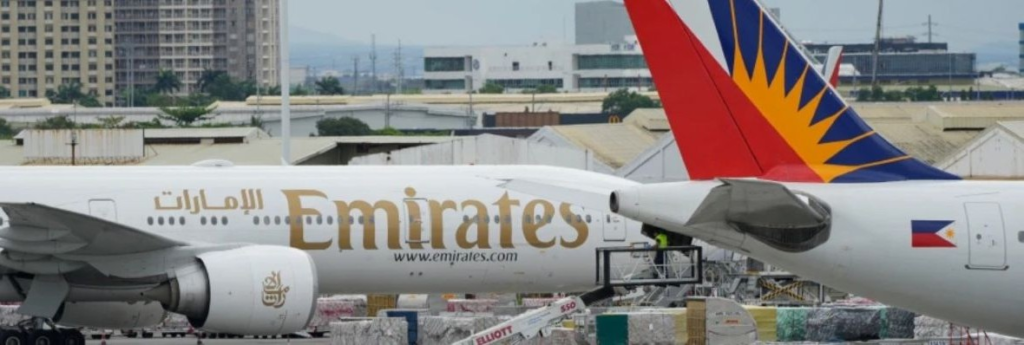
Long-haul carriers Etihad Airways and Emirates, based in Abu Dhabi and Dubai, along with budget carrier FlyDubai, said they would operate select flights from the country, where air traffic was suspended Saturday and defense systems have intercepted Iranian missiles and drones.
At the same time, Air Canada has extended its suspension of flights to Tel Aviv and Dubai until March 23. “If you are in either of these regions, please do not head to the airport. Your safety is our top priority,” the airline added on a post on X.
Dubai’s government urged passengers to go to airports only if contacted directly, warning that operations remained limited. More than 80% of the flights scheduled to and from Dubai and more than half of those to and from Abu Dhabi were still cancelled, according to flight-tracking site FlightAware.
At least 15 Etihad flights departed from Abu Dhabi’s airport Monday to evacuate stranded passengers, according to tracking service Flightradar24, heading to destinations including Islamabad, Paris, Amsterdam, Mumbai, Cairo and London. Regular commercial flights, however, remained suspended.
Emirates said it would begin limited operations Monday evening, prioritizing customers with earlier bookings. FlyDubai said it would operate four flights departing the city and another five arriving planes on Monday, adding that schedules could quickly change as the situation evolves.
With air travel severely limited throughout the Middle East, the conflict that started Saturday stranded travellers in multiple countries besides Iran and Israel. Tourists, business travellers and religious pilgrims found themselves stuck unexpectedly in hotels, airports and on cruise ships.
Dubai International Airport, Abu Dhabi’s Zayed International Airport and Hamad International Airport in Doha, Qatar, are key hubs for travel between Europe, Africa and Asia. All three were all directly affected by Iranian strikes over the weekend. Along with people planning to head to or from the region, travellers who were passing through on multileg journeys also found themselves stuck.
Canadian traveller Raymond Grewal and his wife were returning from a honeymoon in the Maldives when the U.S.-Israeli strikes in Iran trapped them in Dubai on their way back to Vancouver.
“You don’t really have time to process it,” Grewal said. “In the moment, it’s scary. But you’re just trying to figure out the best thing to do, take shelter when they say to, monitor the news, try to get information.”
Airlines elsewhere in the region remained grounded. Qatar Airways said its flights were still suspended, with its next update expected Tuesday. Jordan announced a partial closure of its airspace Monday.
At least 11,000 flights into, out of and within the Middle East have been cancelled since Saturday, impacting more than 1 million passengers, according to an analysis by aviation analytics firm Cirium. It said the major airlines operating in the region, including Emirates, Etihad, Qatar and Saudia, along with all of the carriers in the three main airline alliances, fly around 1,500 flights a day to the Middle East, totaling nearly 389,000 seats.
Governments urged stranded citizens to shelter in place as they scrambled to organize evacuations and alternative routes.
Israel’s flag carrier, El Al, said it was preparing a “recovery operation” to get stranded passengers to their destinations once Ben Gurion Airport near Tel Aviv reopens. The airline said customers with flights booked on El Al and its subsidiary, Sundor, would not be charged for seats on recovery flights, which would initially operate from New York, London, Paris, Rome, Los Angeles and more.
Indonesia said more than 58,000 of its citizens were stranded in Saudi Arabia, where they were visiting Islam’s holy sites in Mecca and Medina during Ramadan. And thousands of travellers also were also stranded on Indonesia’s tourist island of Bali because of international flight cancellations.
Germany’s Foreign Ministry said about 30,000 German tourists were stranded on cruise ships, in hotels or at closed airports in the Middle East. The government said it plans to send aircraft to Oman and Saudi Arabia to evacuate ill travellers, children and pregnant people, while working with airlines to assist others.
The Czech Republic said it was sending several planes to Egypt, Jordan and Oman to bring home citizens from Israel and surrounding countries. With more than 102,000 Britons having registered their presence in the region, the U.K. government was exploring various options, including a possible evacuation, Foreign Secretary Yvette Cooper told Sky News.
If you enjoyed or found this story useful, we’d appreciate if you would forward it to a colleague or friend who may also enjoy it. If, on the other hand, a friend shared it with you, welcome! You can get all the latest travel news and reviews from Travel Industry by simply clicking HERE.