

Experts are casting doubt on U.S. President Donald Trump’s ability to ban new Canadian-made aircraft from American skies in a proposed move that would deal a blow to plane makers, airlines and travellers on both sides of the border.
Regulatory authority for plane certification in the U.S. rests with the Federal Aviation Administration, former Canadian Transportation Agency member Jean-Denis Pelletier said.
“The FAA is controlling the certification,” he said. “Mr. Trump has no authority to do that.”
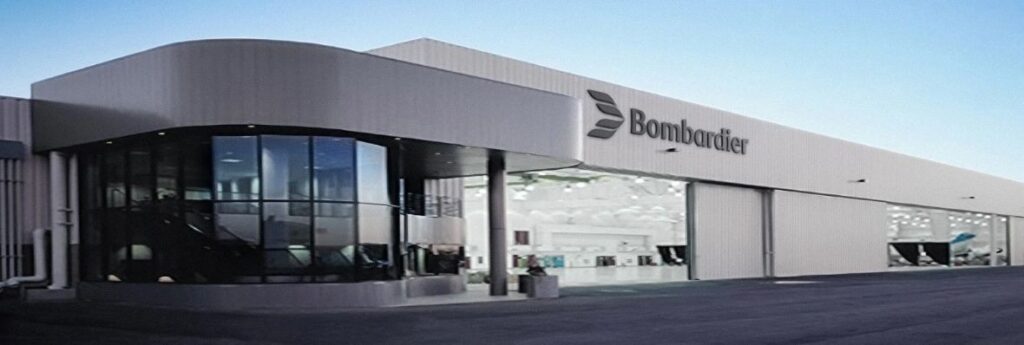
Trump singled out Bombardier Inc. last week in a threat to decertify and tariff Canadian-made aircraft, marking the latest escalation of trade tensions between the two countries.
He alleged in a Truth Social post that Canada has refused to certify four types of business jets made by Bombardier-rival Gulfstream, based in Savannah, Ga., framing the decision to hold off as illegal.
“We are hereby decertifying their Bombardier Global Expresses, and all Aircraft made in Canada, until such time as Gulfstream, a Great American Company, is fully certified, as it should have been many years ago,” Trump said.
The U.S. administration later tempered that statement, indicating the ban would apply only to new aircraft rather than the more than 5,400 Canadian-built planes and helicopters registered in the United States.
“Subsequent clarifications by administration officials suggest that Canadian-made aircraft in operation already would not be grounded due to a move to decertify,” said National Bank analyst Cameron Doerksen.
A White House official confirmed to The Canadian Press that only aircraft that have yet to roll off the assembly line would be affected.
Aircraft assembled in Canada include Bombardier luxury jets and regional planes, A220 single-aisle jets made by French aerospace giant Airbus and helicopters from Texas-based Bell Textron.
De Havilland Aircraft of Canada also produces the Dash 8-400 turboprop as well as a number of other aircraft.
Historically, aircraft groundings by regulators have related strictly to safety reasons. The Boeing 737 Max 8 was banned from the skies for 20 months during the first Trump administration due to safety issues.
“Threatening action by a safety regulator for political purposes would set a dangerous precedent in the aerospace industry – the FAA may not even have legal authority to ground a plane at the whim of the president,” Doerksen said.
The prospect of decertifying new planes even as identical aircraft already in service retain their airworthiness posed another head-scratcher.
“This is really strange, because certification of aircraft is a very, very long process. It takes years,” said Ross Aimer, CEO of California-based Aero Consulting Experts.
Canada has not certified the Gulfstream G700 or G800 business jets, with de-icing noted as a possible issue.
Canadian regulators typically follow their counterparts in the U.S. and Europe, where the planes have received the green light. But the U.S. certificate is conditional. Gulfstream has until the end of this year to prove that the two plane models function “properly under the probable operating conditions where ice may form in the fuel system,” according to a temporary exemption granted by the FAA in January 2024.
The U.S. aviation sector would take a bit hit if Trump imposed tariffs on Canadian aerospace shipments, industry players warned. Bombardier said it employs 3,000 people across nine sites south of the border and has 2,800 U.S. suppliers. The company’s jets typically boast at least 40% U.S. content.
Meanwhile, the U.S. enjoys a large trade surplus with Canada in aerospace, meaning the general trade imbalance Trump has cited to justify other levies does not apply.
The U.S. Commerce Department previously put duties on a Bombardier commercial passenger jet in 2017 during the first Trump administration, charging that the Canadian company was selling the planes in America below cost. The U.S. said then that Bombardier used unfair government subsidies to sell jets at artificially low prices.
The U.S. International Trade Commission in Washington later ruled that Bombardier did not injure U.S. industry.
Quebec-based Bombardier, Canada’s largest aircraft manufacturer, issued the following statement:
“We have taken note of the post from the President of the United States to social media and are in contact with the Canadian government. Bombardier is an international company that employs more than 3,000 people in the U.S. across nine major facilities and creates thousands of U.S. jobs through 2,800 suppliers.
“Our aircraft, facilities and technicians are fully certified to FAA standards and renowned around the world. We are actively investing in expanding our U.S. operations, including a recent announcement in Fort Wayne, Indiana.
“Thousands of private and civilian jets built in Canada fly in the U.S. every day. We hope this is quickly resolved to avoid a significant impact to air traffic and the flying public.”
Bombardier noted that its customers operate a fleet of more than 5,200 aircraft, supported by a vast network of Bombardier team members worldwide and 10 service facilities across six countries. Moreover, it noted its jets are manufactured in aerostructure, assembly and completion facilities in Canada, the U.S. and Mexico.
If you enjoyed or found this story useful, we’d appreciate if you would forward it to a colleague or friend who may also enjoy it. If, on the other hand, a friend shared it with you, welcome! You can get all the latest travel news and reviews from Travel Industry by simply clicking HERE.