

Many Christmas holiday traditions in Iceland will be familiar to North American and European travellers, such as the Christmas trees that dress their living rooms, the large family gatherings that take place, and the singing of yuletide carols. However, there are some aspects of Christmas in Iceland that set it apart, giving the occasion its own unique charm…
- Jólaköttur – The Yule Cat
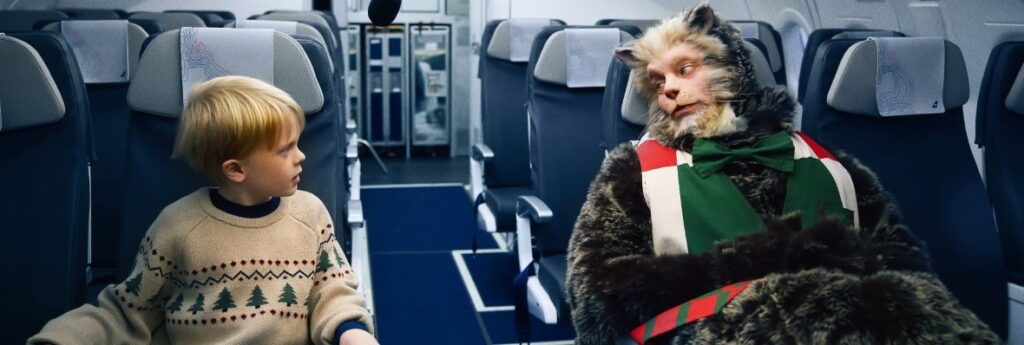
Jólaköttur, most known to all as the Yule Cat, is one of Iceland’s most fearsome Christmas legends. The giant black cat with glowing eyes and pet to the terrifying Grýla and her 13 sons, roams the winter landscape during the darkest months, preying on those who are lazy or idle.
According to folklore, children and adults alike were expected to work hard in the lead-up to winter, finishing weaving and household tasks before Christmas. Those who did were rewarded with new clothes, but anyone without new clothing by Christmas Eve risked being eaten by the Yule Cat.
First recorded in the 19th century, the legend became firmly tied to Christmas after the publication of Jóhannes úr Kötlum’s poem Jólakötturinn, cementing the Yule Cat as a chilling part of Icelandic festive tradition.
- The 13 Yule Lads
Icelandic children can look forward to a visit from 13 different Santa’s in one of Iceland’s more unique traditions. These mischievous Yule Lads visit a home each on the 13 nights leading up to Christmas. Children place a shoe on the windowsill and if you have been good, the Yule Lad will leave candy and toys. If you’ve been bad, you will receive a shoe full of rotting potatoes. Confidential – Not for Public Consumption or Distribution
- Christmas lights
So, how do you celebrate Christmas on the edge of the Arctic region, in a season that provides less than five hours of daylight? You light up your home and embrace the coziness of the season! Icelanders put a great emphasis on Christmas lights, lavishly decorating their houses and gardens in early December that lift the spirits of the people through the darker winter season.
The tradition of lights goes back years in Iceland, as candles used to be the only form of decoration available to the average Icelander. The tallow candles – made from rendered beef or mutton fat – could be found burning brightly at Christmas time. These lights were generally reserved for special occasions, and they invoked a festive spirit in Icelanders, in addition to making the merciless winter just that little bit more bearable.
- Radio dedications
In the old days, a message between two Icelandic people would take a while to reach its destination. With the establishment of the national radio, RUV, in 1930, Icelanders gained a common means of communication. Soon, the reading of Christmas greetings took place over the airwaves. Originally meant for relatives who were far from home, the placing and receiving of a Christmas greeting read out over the radio soon became a cultural tradition. To this day, almost the entire radio program on Dec. 23rd is taken up by holiday greetings and many Icelanders will tune in to listen to the festive address.
- Christmas food traditions
There are a variety of seasonal food and drink which are savoured by Icelanders in the weeks leading up to Christmas. Families often bake various sorts of cookies and consume the national favourite Christmas drink: Malt og appelsín. This is a mix of a locally produced Maltextrakt, a sweet malt drink, and Appelsín, an orange flavoured soft drink. There are also some specific get-togethers that are enjoyed by many – chief among them, the making of Icelandic laufabrauð and the consumption of a fish called skate on Þorláksmessa.
- Reykjavík at Christmas
From the festive lights that adorn Tjörnin, the lake in the centre of Reykjavík, to the large Christmas cat that’s positioned at the point where Austurstræti meets Lækjargata in downtown, there are certainly plenty of Christmas lights to admire.
And at Austurstræti there’s an outdoor ice-skating rink and Christmas market at Ingólfstorg Square. Though more modest in size than the classic German Christmas markets, the liveliness of the square gives the city of Reykjavík a festival feel.
If this article was shared with you by a friend or colleague, you may enjoy receiving your own copy of Travel Industry Today with the latest travel news and reviews each weekday morning. It’s absolutely free – just CLICK HERE.