


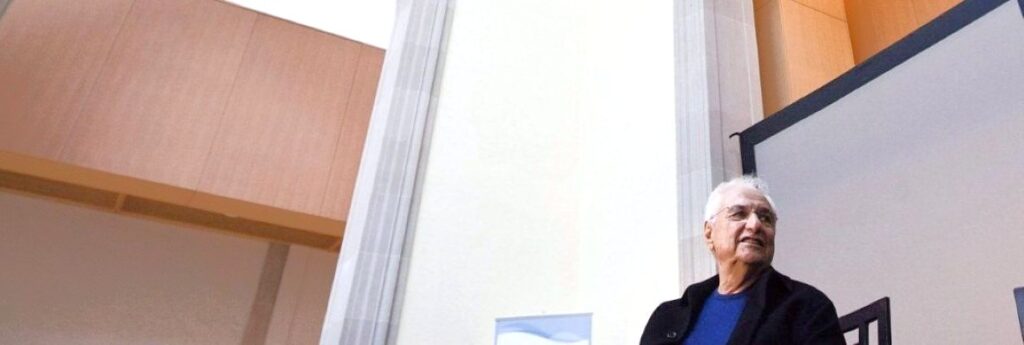
Frank Gehry, the Canadian-born renegade architect behind some of the world’s most recognizable buildings, died Dec. 5 at 96. Known for his unconventional style and daring designs, Gehry brought unique life to cultural spaces including the Guggenheim Museum Bilbao in Spain, the Walt Disney Concert Hall in Los Angeles, and Toronto’s Art Gallery of Ontario – iconic attractions that attract visitors from around the world and even helped put some destinations on the tourist map.
Gehry’s unusual work on museums, office spaces and private homes generated the sort of attention that’s rarely experienced by architects, making his structural creations among the most recognizable in the world. He was even immortalized with a cartoon version of himself in an episode of “The Simpsons.”
Over the course of his career, Gehry was awarded every major prize architecture has to offer — including the field’s top honour, the Pritzker Prize, for what has been described as “refreshingly original” work.
But some of his work drew harsh criticism.
“In Bilbao, Spain, they wanted to shoot me when they saw the (Guggenheim design) and now they get $500 million a year in revenue to the city,” Gehry once laughed. “I don’t know how to overcome (critics), it’s just part of the thing,” he added, noting the Walt Disney Concert Hall was also mocked as “broken crockery.”
Gov. Gen. Mary Simon called Gehry a “true global architectural titan. He was seen by many as one of Canada’s most brilliant artistic minds.”
Meanwhile, Prime Minister Mark Carney offered his condolences on social media, stating, “Frank Gehry was an architectural icon whose bold designs have shaped cityscapes all over the world.”
Here’s a look at some of his work:
Louis Vuitton Foundation, Paris
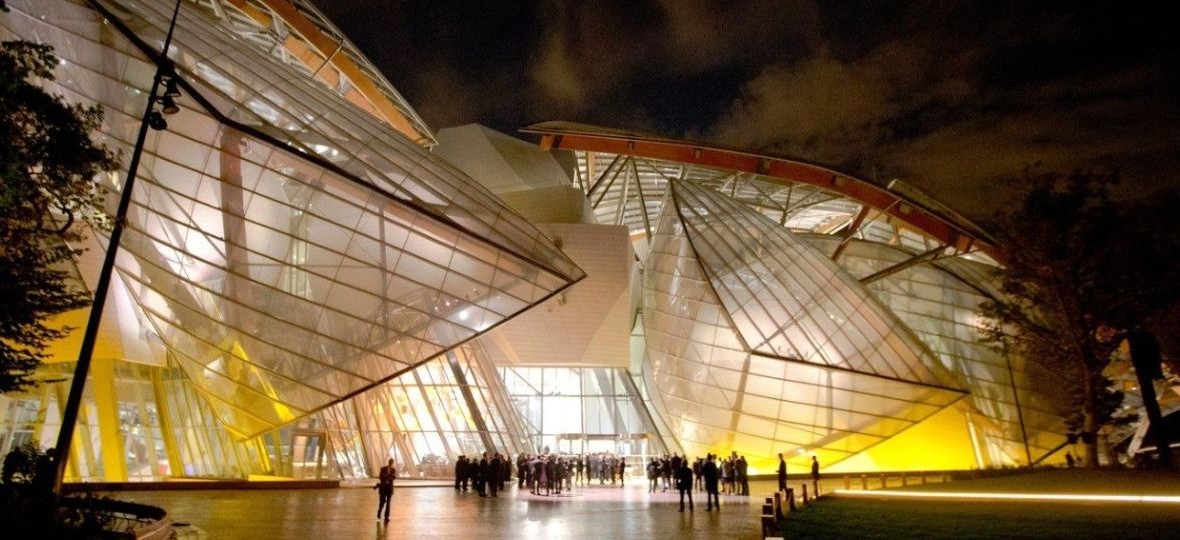
The art museum, which opened in the Bois de Boulogne park along Paris’ western edge in 2014, describes Gehry’s design on its website as “a magnificent vessel for Paris.” Gehry was inspired by late 19th-century glass and garden architecture, and the building “fits easily into the natural environment, between woods and garden, while at the same time playing with light and mirror effects,” the museum’s website says.
“The choice of materials became self-evident: an envelope of glass would cover the body of the building, an assembly of blocks referred to as the ‘iceberg,’ and would give it its volume and its vitality.”
Guggenheim Museum, Bilbao, Spain
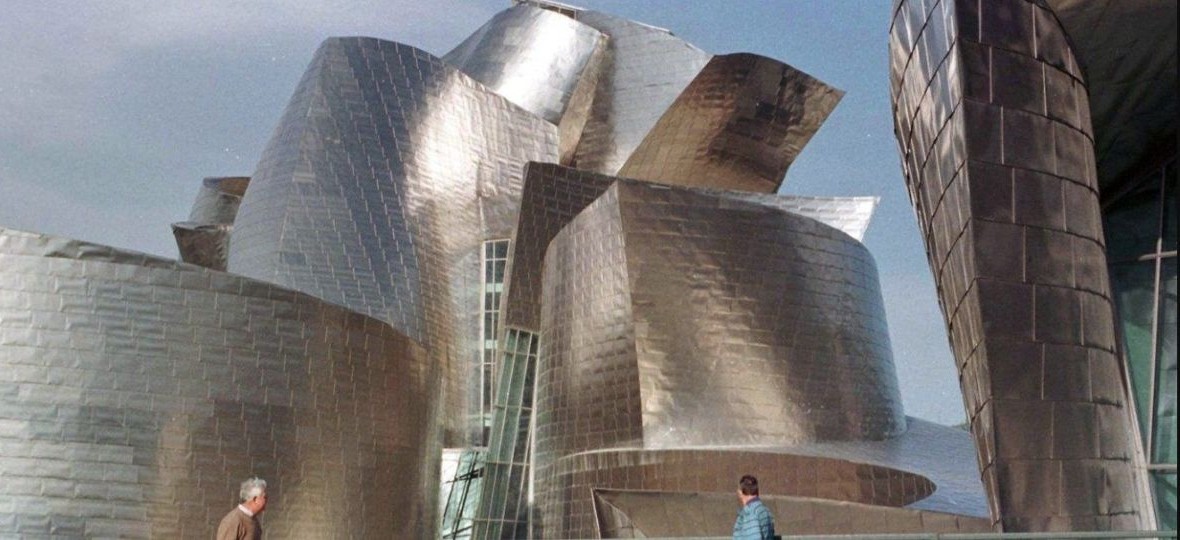 The museum of modern and contemporary art, which opened in 1997 along the Nervion River, is one of Gehry’s most celebrated works. Made of titanium, limestone and glass, the building has become an iconic attraction and drew 1.3 million visitors last year, according to the museum’s website. The exterior features curves, and the museum’s website describes the atrium as “crowned with a metallic flower over its skylight.”
8 Spruce, New York
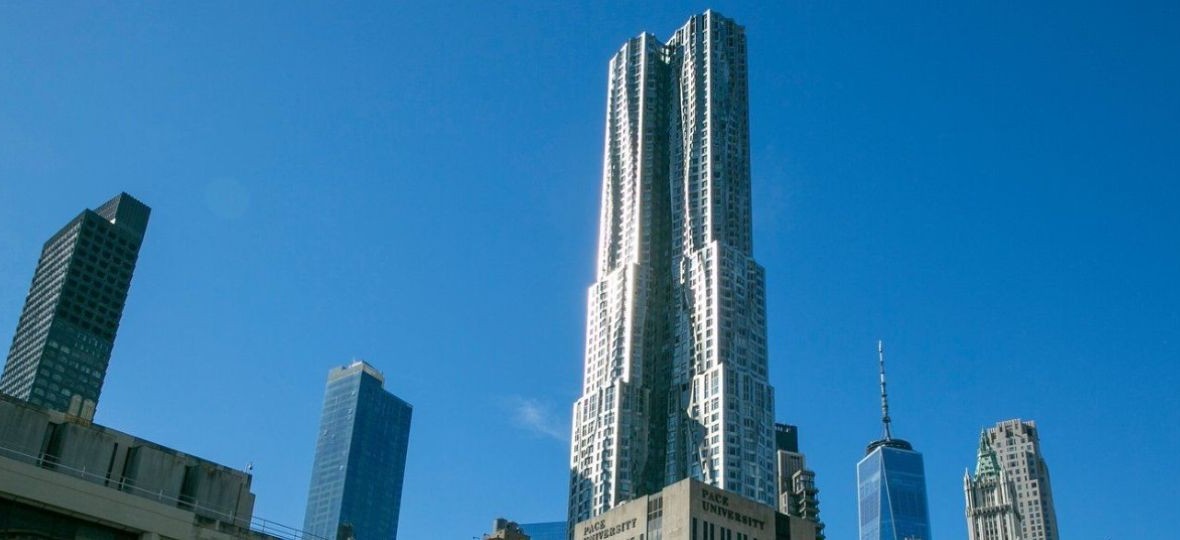 At 76 stories high, this was Gehry’s first skyscraper. The building opened in 2011 in Manhattan’s Financial District as a “striking masterpiece of architectural design where artful living meets practicality and purpose,” its website says, adding that it was the tallest residential building in the Western Hemisphere at the time of construction.
Walt Disney Concert Hall, Los Angeles
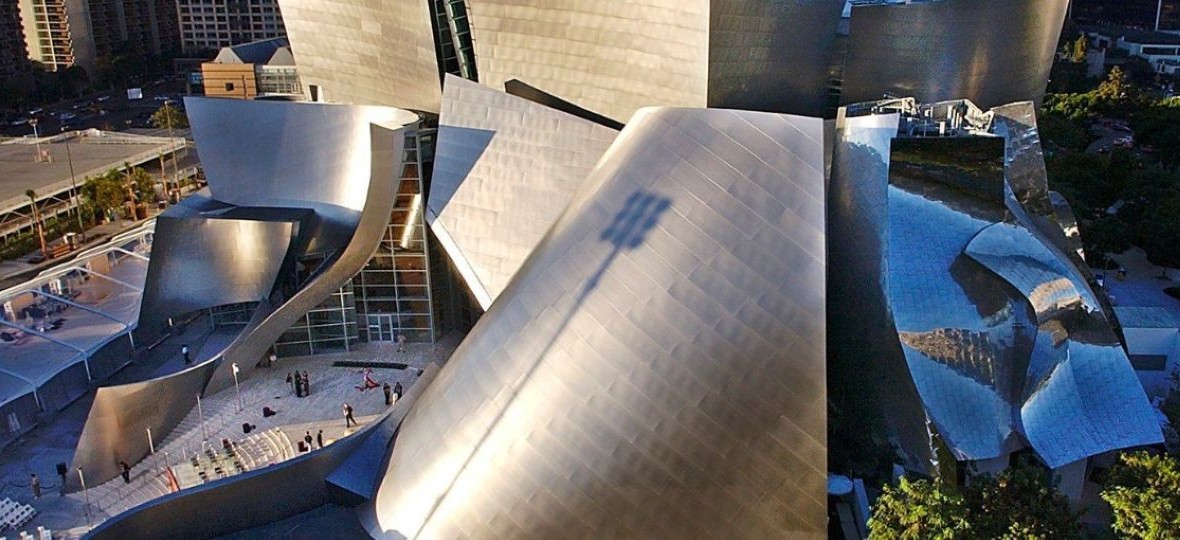
Located in the city’s downtown and home to the Los Angeles Philharmonic Orchestra, the building opened in 2003. In a press release before the opening, the “glistening, curved exterior” was described as embodying “the energy, innovation, and creative spirit of the city of Los Angeles and its orchestra.” The interior seeks to amplify concertgoers’ experience of “the power and passion of music.”
“The outside of the building was designed to reflect the aesthetic of the inside, which in itself evolved according to the highest acoustical standards,” Gehry was quoted as saying in the press release.
New World Center, Miami
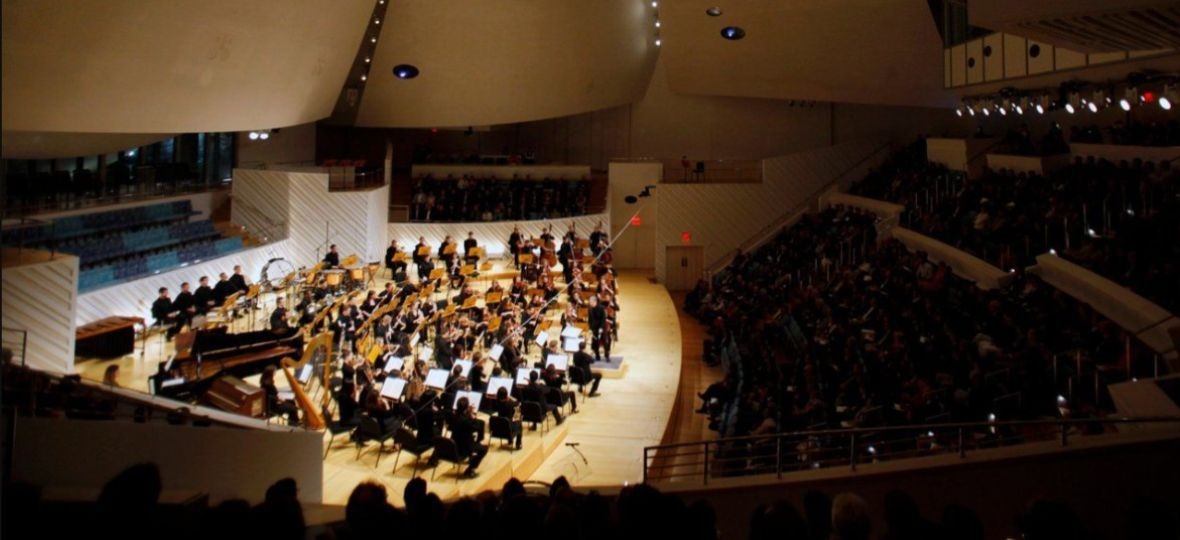
The concert hall, described on its website as an “architectural gem,” opened in 2011. Home to the New World Symphony, an orchestral academy, its atrium features “cascading geometric shapes, curved surfaces and a vaulted ceiling with six stories of natural light,” while the performance hall is known for its “technical capabilities and acoustic integrity,” its website says.
“When Frank Gehry first stepped into the completed New World Center, he told reporters he wept” as he watched rehearsals with Tilson Thomas, the statement said, because he knew it was special.
Art Gallery of Ontario
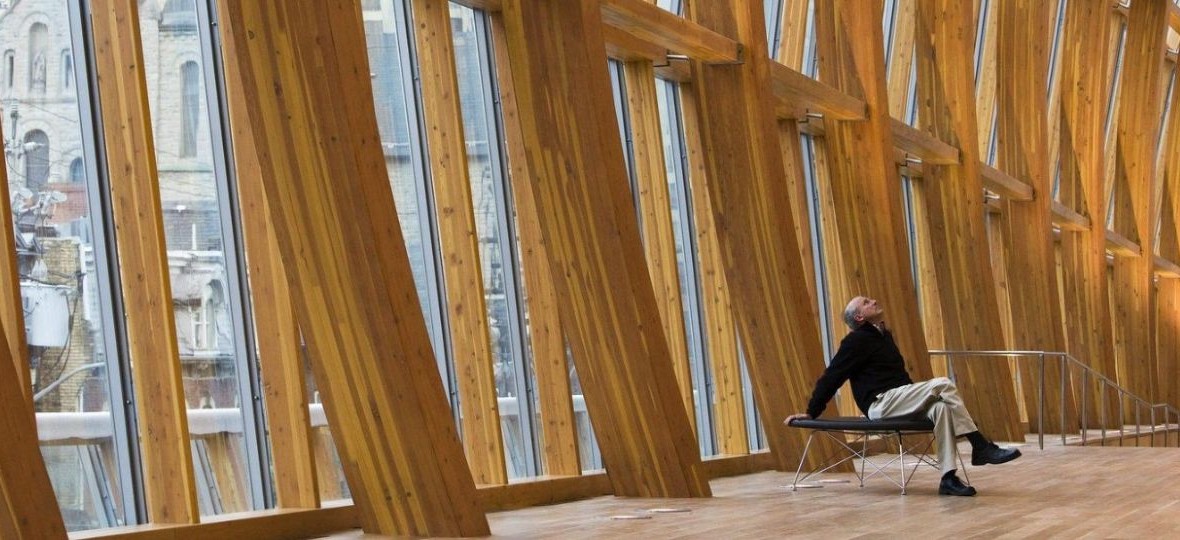
Gehry’s $276-million re-creation of the century-old AGO in 2008 includes the Galleria Italia, a long corridor that links several galleries and has a facade of glass and Douglas fir that curves down an entire city block along Dundas Street in Toronto. The project is also famous for the Allan Slaight and Emmanuelle Gattuso Spiral Staircase. The sculptural staircase is clad in Douglas fir and passes through the glass ceiling, connecting the old building to the expansion.
The project “didn’t just solidify (the AGO’s) position in Toronto or Canada. It solidified its position globally,” says the gallery’s CEO, Stephan Jost. “People made the link between Frank Gehry and Toronto. Of course he’s a Torontonian, right? But people didn’t always know that.”
If this article was shared with you by a friend or colleague, you may enjoy receiving your own copy of Travel Industry Today with the latest travel news and reviews each weekday morning. It’s absolutely free – just CLICK HERE.