

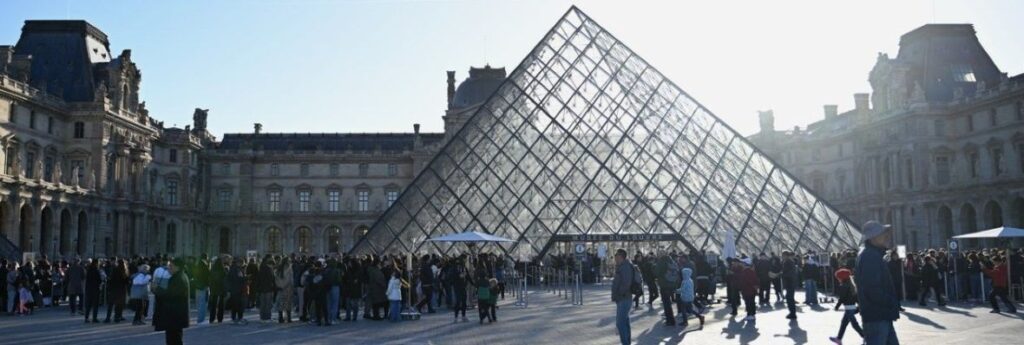
International visitors are being asked to pay the price for renovations and to improve security at the Louvre after the Paris museum was notoriously exposed during a Oct. 19 robbery that saw US$102 million in artifacts looted in a brazen daylight heist. The museum has approved a ticket hike from 22 to 32 euros (CDN$35 to $51), but only for non-European visitors, starting Jan. 14.
The Louvre ticketing changes come as part of a decade-long plan to modernize the museum. It also comes as comes as other major cultural sites across the country, including the Palace of Versailles, are considering similar moves to bring extra money needed for costly maintenance and renovation.
In 2024, the Louvre welcomed 8.7 millions visitors, 77% of them foreigners. Top nationalities include people from the U.S. (13%), China (6%) and Britain (5%), who will be affected by the price hikes. Nationals from Iceland, Liechtenstein and Norway, countries that signed up to the European Economic Area agreement, will be exempted from the hike.
Last month, Louvre director Laurence des Cars announced more than 20 emergency measures have started being implemented following the robbery. She said the Louvre’s latest overhaul in the 1980s is now technically obsolete.
The cost for the so-called “Louvre New Renaissance” plan is estimated at up to 800 million euros to modernize infrastructure, ease crowding and give the famed Mona Lisa a dedicated gallery by 2031.
The new policy, championed by Culture Minister Rachida Dati, could be extended to other major cultural sites across France. The Palace of Versailles is considering a 3-euro (CDN$4.80) hike for non-EU visitors.
Some have argued that such a policy could be counterproductive if it leads to a fall in the number of visitors. But other institutions see it as a potential solution.
The director of the Chateau de Chambord, one of the most striking chateaus in the Loire Valley, said more money is needed to finance heavy renovation work at his institution.
“Australians, people from New Zealand, Americans, when they come to see Chambord, sometimes that’s once in a lifetime. Paying 20 or 30 euros doesn’t change anything,” said Pierre Dubreuil.
It’s not unusual
Extra fees for international visitors are not unusual in many countries across the world, often driven by the need to increase revenue to match the costs of maintaining heritage sites.
In the United States last week, the National Park Service announced it is going to start charging the millions of international tourists who visit U.S. parks each year an extra $100 to enter some of the most popular sites, like Yellowstone and the Grand Canyon.
The idea of higher prices for tourists has been debated but not implemented in Britain, where admission to the permanent collections of major museums and galleries is free.
In its budget last week, the U.K. government announced that British cities would be able to levy a “tourist tax” on overnight visitors, similar to fees in cities including Paris and New York. The money would help fund services and infrastructure in the cities.
Charging foreign visitors to major attractions in Africa more than local or regional visitors is common practice across the continent.
Whether it’s a hike to see gorillas or a “Big 5” safari, international visitors to game parks and museums can expect to pay at least four or five times more than residents.
The revenue collected is credited with helping both the local economies and the protection of wildlife. Kruger National park in South Africa charges foreigners $35 a day, but South African residents $8. Masai Mara, Kenya, charges foreigners $200 day, but Kenya residents $24.
If this article was shared with you by a friend or colleague, you may enjoy receiving your own copy of Travel Industry Today with the latest travel news and reviews each weekday morning. It’s absolutely free – just CLICK HERE.