


While Myrtle Beach has only been officially around since the early 20th century, there is a good bit of Revolutionary War history that can be found along the Grand Strand. History aficionados, and even the mildly curious, can easily hop in their car and check out the following locations for a fascinating window into the region’s past.
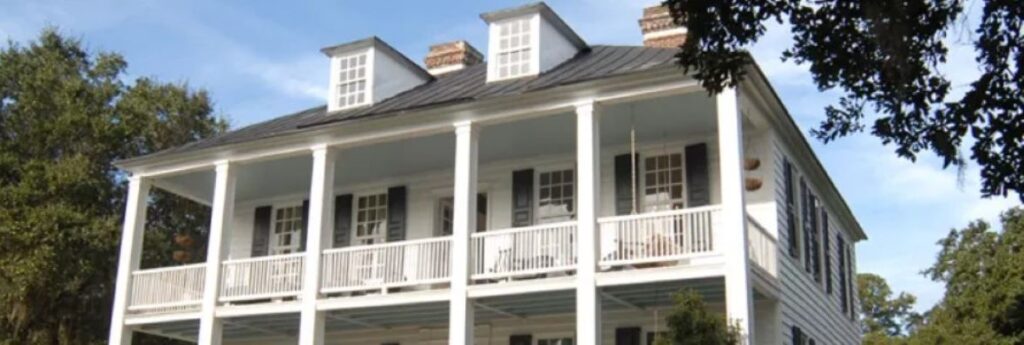
- Hopeswee Plantation, near Georgetown (continue past Georgetown on Hwy. 17, it will be on the right): Not only was the home here definitely in existence during the American Revolution, it was the birthplace one of a founding fathers, Thomas Lynch, Jr., a signer of the Declaration of Independence. This is perhaps the most historic site in the region. Check the website for information on historic tours, cultural demonstrations, dining options and the opportunity to hold an event there. The centuries-old setting is both exceptionally beautiful and educational.
- South Carolina Hall of Fame, Myrtle Beach (Inside the Myrtle Beach Convention Centre): Filled with portraits of the state’s favourite sons and daughters from every era of South Carolina’s history, the two most prominent figures honoured for their service during the Revolution are Francis Marion, nicknamed the Swamp Fox, and Peter Horry. The names resonate today: Swamp Fox is the 72-foot wooden roller coaster at the Family Kingdom Amusement Park (Family Kingdom Amusement Park and Splashes Oceanfront Water Park) and Horry County is where Myrtle Beach is located.
- The Peter Horry / Horry County Historical Market, Conway (in front of the old courthouse): Peter Horry was born in Georgetown into a family of French Huguenot descendants; hence the “H” is not pronounced in his name. The county was named for Peter before his death to primarily honour his service during the Revolution, including during victorious 1776 battle at what we now know as Fort Moultrie, near Charleston.
- The Horry County Museum, Conway (beside the public library): Considered a local treasure, the museum features a military exhibition gallery with a replica of Revolutionary War campsite with related artifacts. The exhibit includes notes like those Horry would have taken when documenting the military exploits of his friend, The Swamp Fox.
- The Kingston-Conway / Robert Conway Historical Marker, Conway (in front of City Hall): Not only was Robert Conway a veteran of the Revolutionary War, but he was also Peter Horry’s successor as Brigadier of the Sixth South Carolina Brigade. Therefore, it is fitting that the City of Conway is the County Seat of Horry County. While it was Peter Horry’s military prowess that led to the county’s naming, it was most probably the donation of 223 acres to the town by Robert Conway that influenced the change in that municipality’s moniker 60 years after his death in 1823.
- Marsh Tacky Horse, Murrells Inlet (at Brookgreen Gardens’ Floyd Family Farm adjacent to the Lowcountry Zoo): Much of the success of the Swamp Fox and his men was due to their horses, the Marsh Tackies. Their name was derived from the terrain they were used in and “tacky” refers to the fact that they were common during the revolutionary years when everyone had one. Today, they are rare and facing near-extinction, but conservation efforts have increased their dwindling numbers four-fold in the last decade. It is South Carolina’s State Heritage Horse.
- Withers Swash, Myrtle Beach (where the Swashbuckler Disc Golf Course and the New Town Bark Park are located now): Centuries before Myrtle Beach came to be, Withers Swash was the location of Withers Plantation that was created as a result of the Revolution. While the plantation no longer exists, adjacent to the dog park is the Withers Cemetery, it is believed two family members are interred in unmarked graves.
- Kaminski House Museum, Georgetown (at one the end of the Historic River Walk): Before the Revolution, Paul Trapier of Georgetown was one of the wealthiest merchants in the colony. During the war, he was instrumental in provisioning the American troops. It is believed that his home that is now known as the Kaminski House existed during this time.
- William Bartram Trail Historical Marker, Myrtle Beach (located at the entrance of Hurl Rocks Park): When U.S. founding fathers declared independence, it not only brought a time of war, but a time of exploration. One of the notable scientists of the day who was instrumental in cataloging the flora and fauna of our new country was William Bartram. His detailed notes, the sketches that he drew and the specimens that he collected formed the basis of a book that he published in 1791 that offered a virtually unparalleled depiction of 18th century America.