


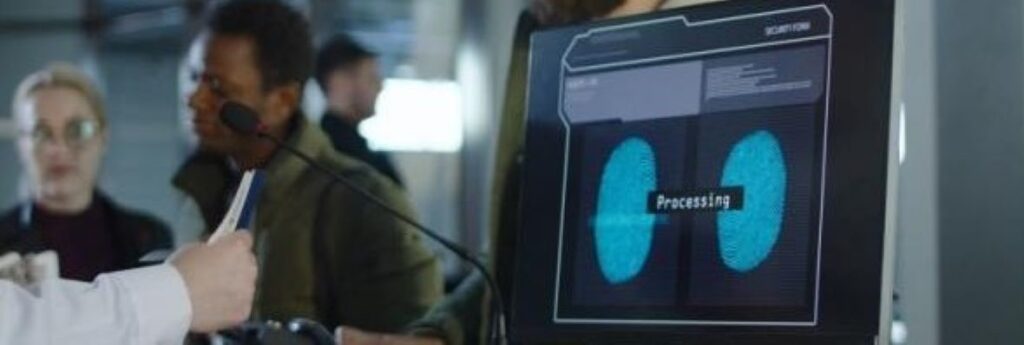
Starting Sunday, travellers – including Canadians – heading to Europe’s Schengen zone countries’ will face new entry protocols. However, even though it may seem like acronym hell, the new EES (Entry/Exit System) should cause little sweat, and ought not be confused with what will be the more cumbersome – and costly – ETIAS (European Travel Information & Authorization System), which is coming (supposedly) next year.
For now, starting Oct. 12, non-EU nationals who do not require a visa to enter any of the 29 countries that comprise the Schengen zone – which notably does not include Britain – may simply face enhanced border protocols that includes digital data collection and profiling of key traveller information, including passports.
Why “may”? Because the system will gradually be introduced at border crossing points with full implementation by April 10, 2026.
However, the EES will gradually replace the manual stamping of passports at border crossings. During the first 180 days after the EES is introduced, border officers will continue to stamp passports in addition to registering entries and exits digitally. After the transition period, only the digital system will be used.
What else is there to know?
Why is Europe doing this?: To make it borders more modern and efficient; to make travel across borders easier and faster; to prevent irregular migration; and to increase security in the Schengen area.
What is required?: Beside your passport, bring your face and fingers. Travellers will need to provide personal data each time they reach the external borders of the European countries using the EES. The EES collects, records and stores:
- data listed in travel document(s) (e.g. full name, date of birth, etc.)
- date and place of each entry and exit
- facial image and fingerprints (called ‘biometric data’)
- whether the individual was refused entry or has overstayed the duration of the EES.
First time visitors: Those arriving at a border crossing point for the first time since the EES started will have to provide their personal data. Passport control officers will take a facial photo and/or scan fingerprints. This information will be recorded in a digital file. The process can be quicker by registering data in advance via dedicated equipment (“self-service system”), if available at the border crossing point; and/or a mobile application if made available by the country of arrival or departure.
Return visitors: If you have crossed the borders of the European countries using the EES more than once since the EES started, the photo of your face and/or your fingerprints will already be recorded in the EES and the passport control officers will only verify your fingerprints and photo, which will take less time. In rare cases, it may be necessary to collect and record the data again. If you hold a biometric passport, you will be able to enter more quickly using the self-service system (if available at that border crossing point).
Will it take longer to enter?: Experts estimate that the new system could result in longer waits (up to three time longer) while the system is its initial phase as border officials process facial and fingerprint scans.
Validation period: The EES is valid for short stays of to 90 days within any 180-day period. This period is calculated as a single period for all the European countries using the EES.
Which are the Schengen countries?: Austria, Belgium, Bulgaria, Croatia, Czechia, Denmark, Estonia, Finland, France, Germany, Greece, Hungary, Iceland, Italy, Latvia, Liechtenstein, Lithuania, Luxembourg, Malta, the Netherlands, Norway, Poland, Portugal, Romania, Slovakia, Slovenia, Spain, Sweden and Switzerland.
For more information, visit https://travel-europe.europa.eu/ees##
If this article was shared with you by a friend or colleague, you may enjoy receiving your own copy of Travel Industry Today with the latest travel news and reviews each weekday morning. It’s absolutely free – just CLICK HERE.