


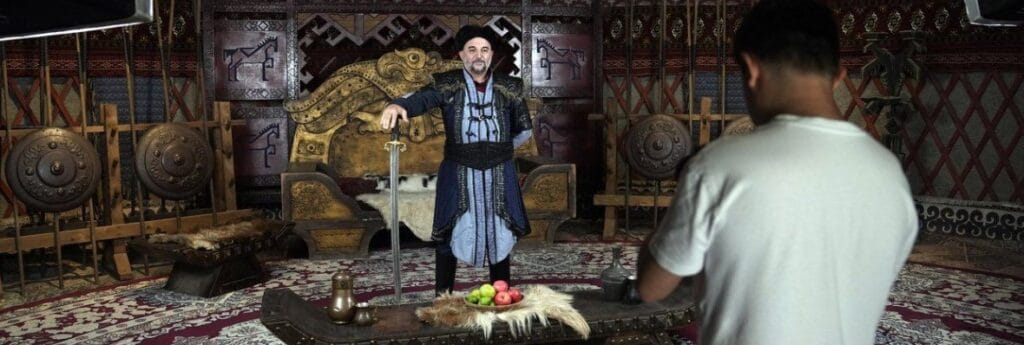
Under the sweltering Turkish sun, tourists wander through sets that recreate Ottoman and Byzantine-era castles, take selfies with actors in traditional costumes and watch horseback stunt performances. The global popularity of Turkish TV dramas – or dizi in Turkish – has greatly bolstered the nation’s international image and is drawing millions of viewers and tourists worldwide to its historical and cultural sites which are backdrops to many of the shows.
The success of television shows has fuelled a burgeoning billion-dollar industry that continues to expand into new markets, experts say.
Between 2020 and 2023, the global demand for Turkish series increased by 184%, positioning Turkey as one of the biggest exporters of TV shows around the world, according to Parrot Analytics, a research company.
“We reach over 400 million viewers every night around the world,” said Izzet Pinto, CEO of Global Agency, which exports Turkish dramas to world markets.
Although “Deli Yurek” was the first Turkish series to be exported – to Kazakhstan in 2001 – it was the 2005 romantic series “Gumus” that catapulted Turkish dizis to global fame. The series, which revolves around a woman from a traditional background adapting to urban life, became immensely popular in the Middle East.
“A Thousand and One Nights,” a 2006 romantic drama loosely based on the collection of Middle Eastern folktales and set in modern-day Istanbul, captivated audiences in the Balkans, while “Magnificent Century,” based on the 16th-century Ottoman Sultan Suleyman the Magnificent, led the way for historical fiction.
Once an importer of Latin American telenovelas, Turkey is now exporting its dramas to the region. Venezuelan President Nicolás Maduro visited the set of the historical drama series “Resurrection: Ertugrul” in 2018, highlighting the appeal of the dizi in his nation.
Haley Uganadi, the founder of the Turkish TV series fan platform “Dizilah,” says the popularity of the dramas comes from themes that focus on family, friendship, and love, usually set against the backdrop of luxurious lifestyles in Istanbul or Turkey’s rich history.
Her platform receives about 1.5 million viewers monthly, with fans from the U.S., Canada, Greece, India, and Pakistan.
The first episode of “Resurrection: Ertugrul” had over 157 million views on the YouTube channel of Turkish state broadcaster TRT, said producer and screenwriter Mehmet Bozdag, who created the popular historical dramas that fictionalize the lives of Ottoman leaders and heroes. And “Foundation: Osman” was broadcast in over 110 countries, he said.
During its run, “Resurrection: Ertugrul” peaked as the fourth most in-demand show worldwide in May 2020, with demand more than 68 times that of the average show worldwide, according to Parrot Analytics.
Riia Toivanen, 22, a devoted fan of Turkish television drama who travelled to Istanbul from Finland with her mother to delve into the realm of her beloved shows, toured Bozdag Film Studios, a vast complex in northern Istanbul, where historical Ottoman-era blockbusters are shot.
Toivanen says her love of the romantic Turkish dramas brought her to Istanbul. “I like Turkish culture very much,” she said. “(The series are) very friendly and warm, and there is a lot of drama going on.”
If this article was shared with you by a friend or colleague, you may enjoy receiving your own copy of Travel Industry Today with the latest travel news and reviews each weekday morning. It’s absolutely free – just CLICK HERE.