


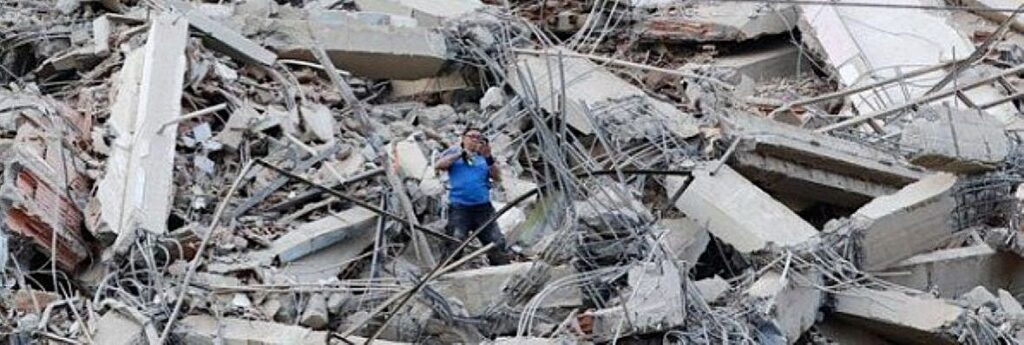
Efforts by local and international rescue teams to pull survivors from the rubble grew increasingly desperate in Venezuela on Sunday, four days after two powerful earthquakes shook the northern state of La Guaira.
The government reported more than 1,420 dead from the quakes Saturday as rescuers and civilians searched for earthquake survivors and families reported at more than 70,000 people missing, following the devastating one-two punch of 7.2 and 7.5 magnitude earthquakes.
Tensions peaked over what many Venezuelans viewed as an inadequate response by the government, whose soldiers, firefighters, police and military cadets were evidently underprepared to respond to the scope of the tragedy.
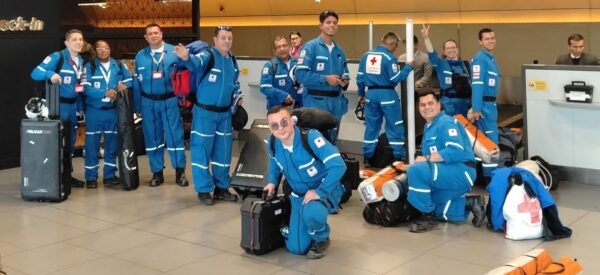
Venezuelan officials said 17 flights carrying more than 1,600 rescue team members had touched down by Saturday.
As part of its efforts to help mitigate the impact of the emergency and maintain travel to and from the country, Avianca announced that it would operate flights between Colombia and Venezuela through Arturo Michelena International Airport in Valencia.
The operation will include both regularly scheduled service and additional charter flights, operated with Airbus A320 aircraft with capacity for 180 passengers, which includes emergency response teams in coordination with the airline’s humanitarian partners, such as the Colombian Red Cross and the Colombian Civil Air Patrol, to support rescue and emergency response efforts.
Governments, nonprofits and members of the Venezuelan diaspora around the world are mobilizing to respond after the quakes. Help is needed for search and rescue efforts, emergency shelter for displaced families and emergency health care, followed by safe water and sanitation, according to the International Federation of Red Cross and Red Crescent Societies.
Humanitarian organizations will face many challenges, including airport closures and the need for fast-tracked visas for aid workers, said Michael Capponi, president of Global Empowerment Mission (GEM).
“No single organization can meet all the needs alone,” he said. “Collaboration across governments and NGOs is critical to ensuring we cover all ground efficiently and swiftly.”
Prime Minister Mark Carney described the earthquakes as “catastrophic” and said Canada is preparing humanitarian assistance to support Venezuelans in the days and weeks ahead.
Right now, here are some of the responding organizations you can support. The nonprofit evaluator Charity Navigator recommends donors avoid fraudulent fundraising campaigns by assessing whether an organization has a history of working on the specific type of disaster and in the affected region, and if it is a registered 501(c)(3) nonprofit.
- International Red Cross: Despite experiencing damage to its own headquarters, the Venezuelan Red Cross’ nationwide network of hospitals and clinics remains active and continues to deliver care. Rescue teams are supporting evacuation and search efforts as well as mobilizing prepositioned relief supplies. Red Cross Societies in Ecuador, Colombia, Mexico, Costa Rica, Honduras and Argentina — countries home to large Venezuelan communities — have activated services to restore family links and help people find news of their loved ones.
- Doctors Without Borders: When disasters strike, Doctors Without Borders strives to provide critical care in areas where people’s needs are greatest. The organization says, “We rely on a community of supporters in Canada to keep providing essential care around the world.”
- Airlink: The global humanitarian organization helps facilitate transport and logistics for other nonprofits needing to send relief and personnel to disasters worldwide. It will mobilize airlines and logistics companies to send search-and-rescue teams, medical responders and supplies to Venezuela.
- Global Empowerment Mission: The Florida-based humanitarian relief organization is collaborating with its long-term partner We Love Foundation, which supports Venezuelans. GEM immediately began packing emergency supplies for shipment Thursday to Caracas, where it has set up a distribution hub. GEM has responded in Venezuela before, including in 2018 and 2019.
- CORE: The humanitarian nonprofit is deploying personnel and partnering with The Wayuu Taya Foundation, a nonprofit that supports Indigenous Wayuu communities in Venezuela and Colombia and who has staff on the ground in Caracas. They aim to support impacted families with food, drinking water, hygiene kits and other critical resources. CORE was founded after the 2010 Haiti earthquake.
- Direct Relief: The California-based medical humanitarian organization is funding the deployment of a team from Spanish Bomberos Unidos Sin Fronteras (BUSF) to assist search-and-rescue efforts, and is poised to send medical supplies to local healthcare partners as needed. Direct Relief has responded to multiple earthquakes, including the 2023 disaster in Syria and Turkey.
- World Central Kitchen: The nonprofit founded by Chef José Andrés is mobilizing to serve hot meals to affected families and first responders as quickly as possible. WCK has led multiple responses in Venezuela, most recently in 2024 when families in the state of Sucre were displaced by Hurricane Beryl.
- Catholic Relief Services: The international aid agency of the U.S. Catholic Church is working with local partner Caritas Venezuela to deliver emergency shelter, food, water and medical care to impacted families.
- Global Impact: The philanthropy adviser and intermediary has set up a Venezuela Earthquakes Response fund that will funnel aid to multiple vetted organizations, including UNICEF USA and Save the Children, which has had a team in Venezuela since 2019.
If you enjoyed or found this story useful, we’d appreciate if you would forward it to a colleague or friend who may also enjoy it. If, on the other hand, a friend shared it with you, welcome! You can get all the latest travel news and reviews from Travel Industry by simply clicking HERE.